
A frosty churchyard, candlelight at the reception and photographs beneath bare winter trees can make a wedding day feel wonderfully atmospheric. But choosing winter wedding gowns is not simply a matter of adding long sleeves. Your dress needs to reflect your personal style, suit the setting and help you feel comfortable from the first photograph to the final dance.
The good news is that a winter celebration gives you permission to embrace richer fabrics, considered layers and a little more drama. Whether your plans involve a grand country house, an elegant city venue or an intimate December gathering, the right gown can feel every bit as bridal while working beautifully with the season.
Begin with your venue, not just the weather
Winter weather in the UK can be unpredictable, but the venue often matters more than the forecast. A ceremony in a draughty historic building calls for a different approach from a celebration where you will step straight from a heated car into a modern hotel.
Think about the parts of the day when you will be outdoors: travelling to the ceremony, greeting guests, having photographs taken and moving between spaces. You do not need a heavy dress for every minute, particularly if your venue is warm, but you will want a plan for those colder moments.
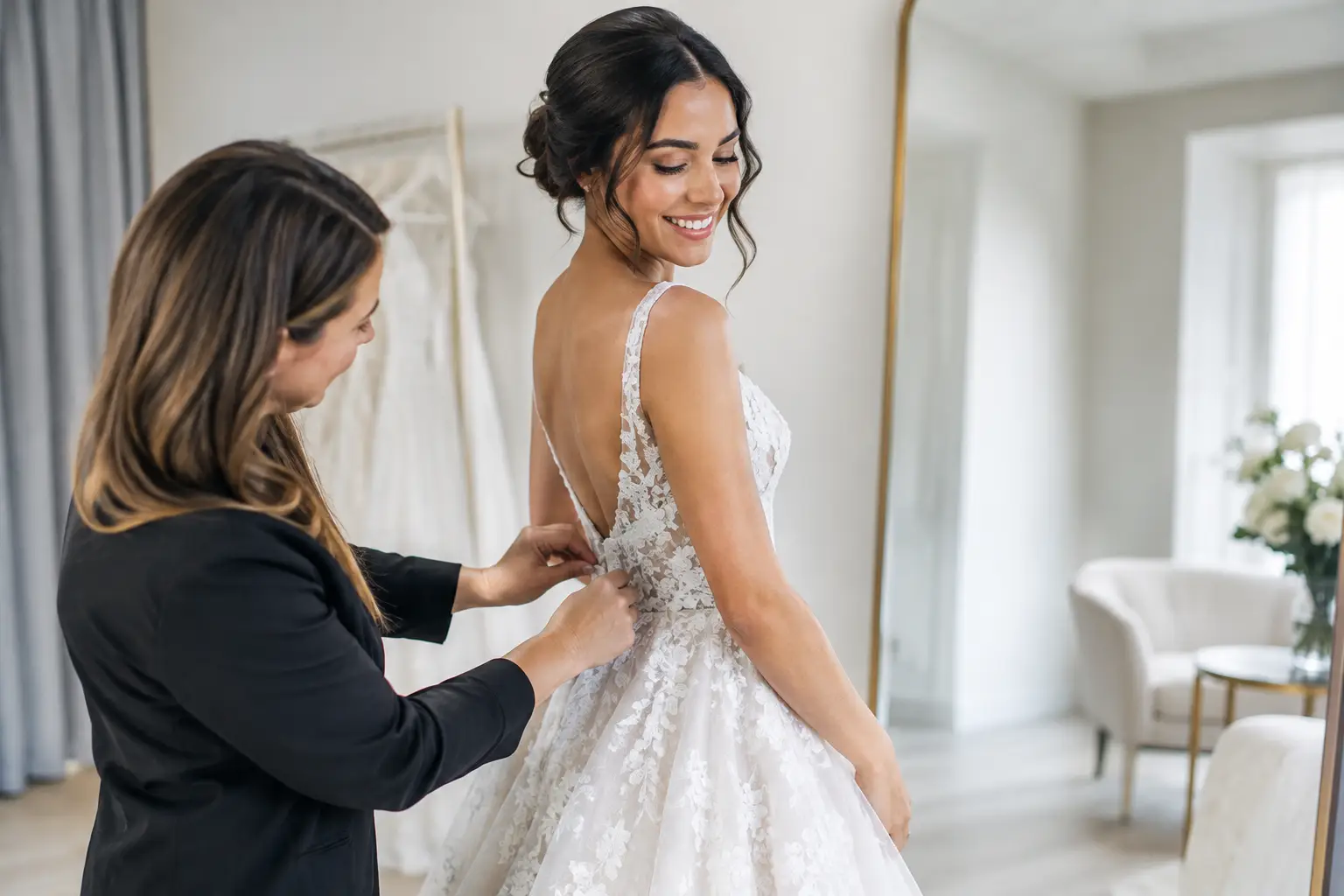
A bridal stylist can help you consider the whole day rather than choosing a gown based on one beautiful image. At Serena Bridal, this is part of the conversation during a relaxed appointment: how the gown feels, moves and photographs is just as valuable as how it looks on the hanger.
Fabrics that make winter wedding gowns feel special
Fabric changes the mood of a wedding dress immediately. Winter is a lovely time to look beyond very lightweight, beach-inspired materials and consider fabrics with structure, depth or a soft sheen.
Satin and mikado for polished elegance
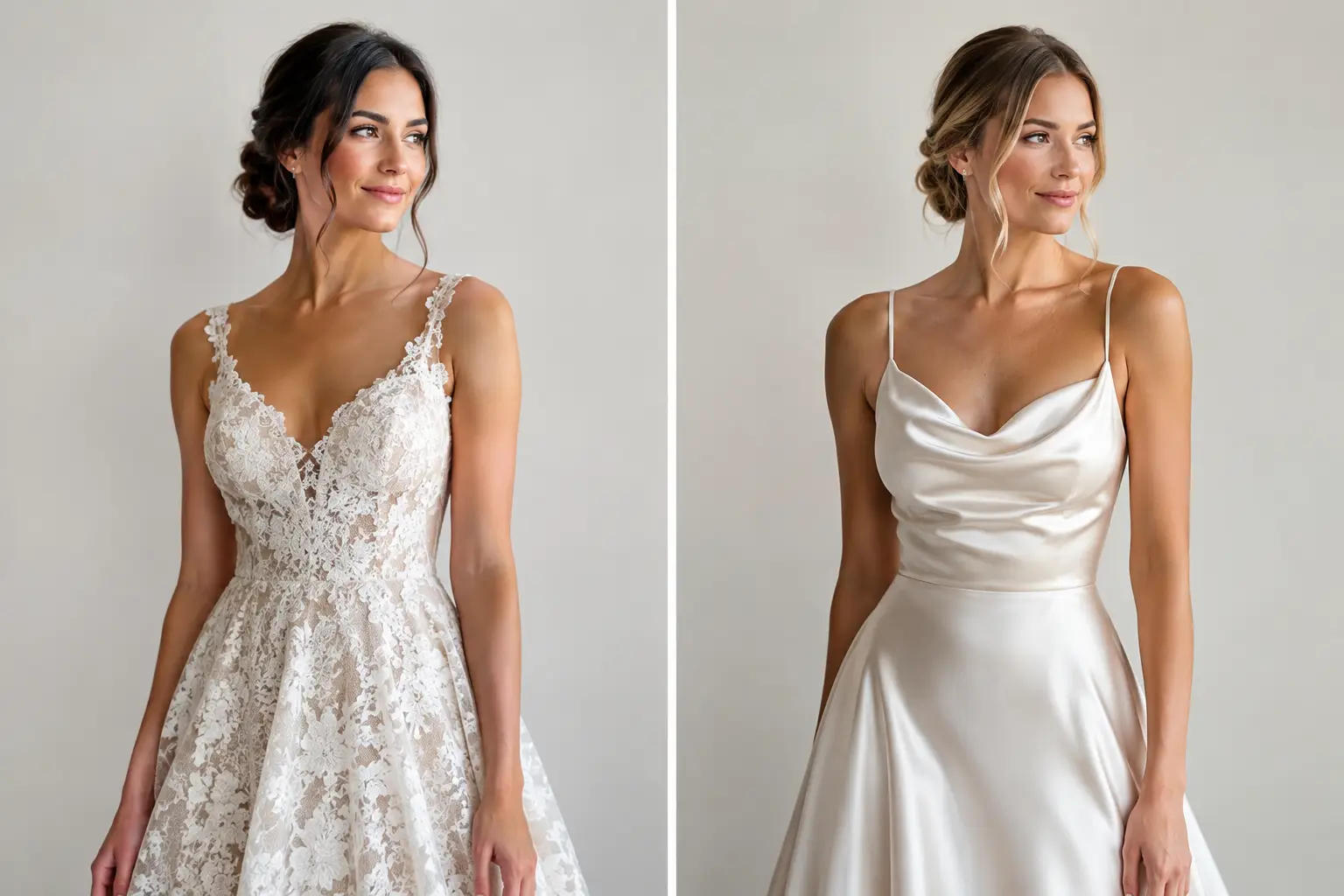
Satin has a luminous finish that suits formal winter venues particularly well. It can create a clean, elegant silhouette in an A-line, ballgown or fitted design, while its weight often feels more substantial than chiffon. Mikado, a structured silk-blend fabric, offers a similar sense of occasion with a crisp finish that holds its shape beautifully.
These fabrics are excellent if you love a minimalist gown but still want impact. A simple satin dress paired with a statement veil, pearl jewellery or a dramatic wrap can feel timeless rather than plain.
Crepe for understated sophistication
For brides who prefer a modern, pared-back look, crepe is a beautiful option. It has a soft, fluid fall and works especially well in column, fit-and-flare and sleek long-sleeved gowns. It is not necessarily warm on its own, so this choice may suit a heated venue and a bride who intends to add a cape, coat or cover-up for outdoor photographs.
Lace, tulle and sparkle for texture
Lace brings romance to winter dressing, whether it appears as delicate long sleeves, a high neckline or detailed appliqué across a fuller skirt. Layered tulle can also look magical under evening lighting, especially when finished with subtle beading or glittering detail.
The trade-off is worth remembering: highly embellished gowns may feel heavier, and detailed sleeves can limit the type of jacket or cape that sits comfortably over them. Try every part of your outfit together before making a final decision.
Sleeves are a style choice, not a rule
Long sleeves are often the first thing brides imagine for a winter wedding, and they can be stunning. From fitted lace sleeves to softly gathered bishop sleeves, they add shape, coverage and a distinctly seasonal feel. A high neckline with long sleeves can create a refined, almost vintage-inspired look, while an off-the-shoulder neckline keeps the overall effect romantic and open.
However, sleeves are not essential. Many brides feel most like themselves in a strapless, sweetheart or sleeveless gown, and comfort matters. If that is you, choose the dress you love and use removable layers for warmth. You should not feel obliged to change your bridal style just because of the month on the calendar.
Detachable sleeves are also worth considering. They offer two looks without requiring a complete outfit change: a little extra coverage for the ceremony, then a lighter feel for the evening celebration. As with any accessory, check that they are comfortable when you sit, hug guests and lift your arms for dancing.
Add warmth with layers you will want in photographs
Your outer layer should feel like part of the outfit, not an afterthought hurriedly borrowed on the morning of the wedding. Winter gives you a chance to choose accessories that are both useful and memorable.
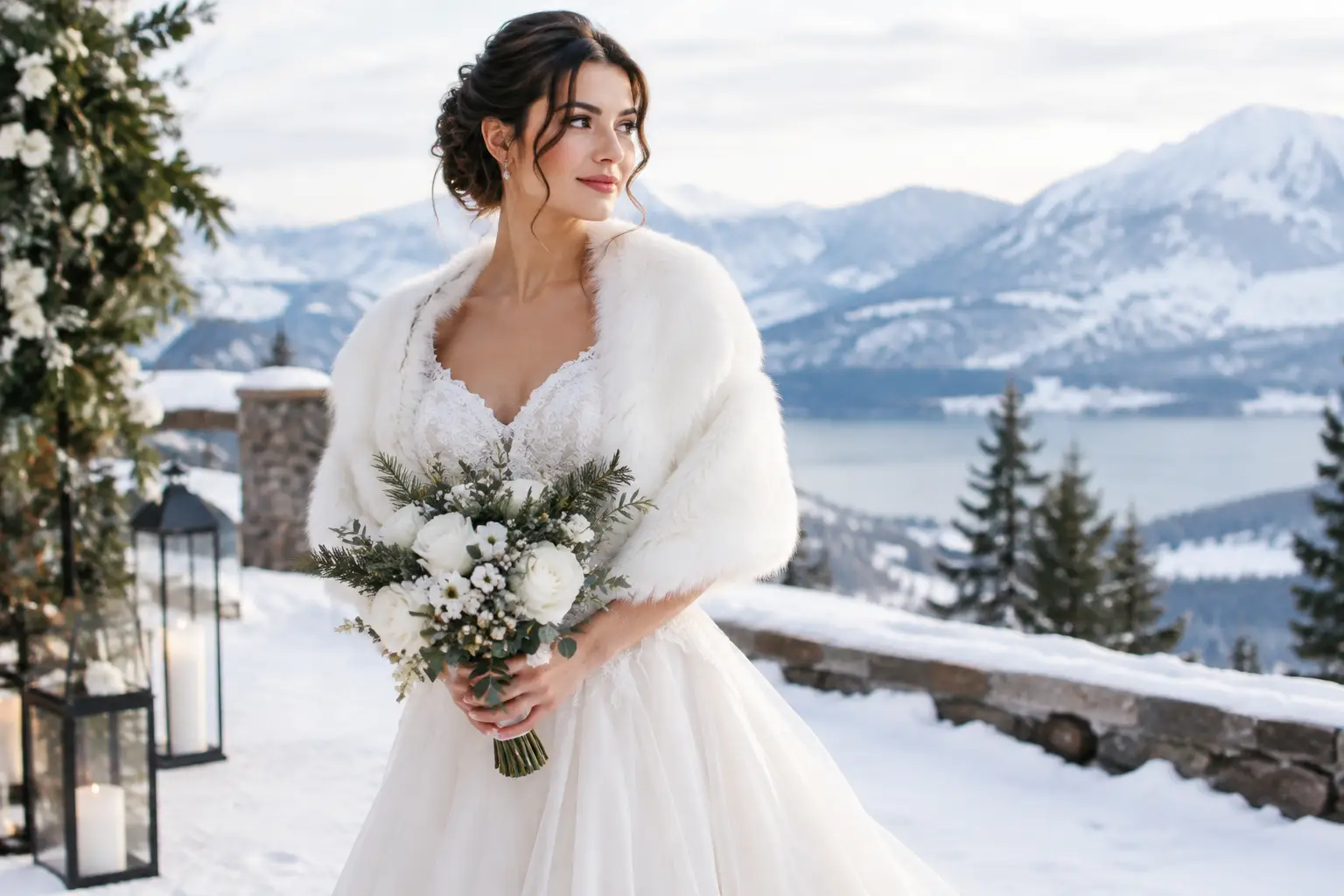
A faux-fur stole or jacket brings a glamorous finish to a satin or lace gown and can be particularly lovely for evening portraits. A tailored white coat creates a polished, fashion-led look, while a wool wrap feels softer and more relaxed for a rustic or countryside celebration. For something more distinctive, a bridal cape can add movement and drama without hiding the detail at the front of your dress.
Consider proportion carefully. A cropped jacket tends to work well with a defined waist and a full skirt, whereas a longer coat can complement a simple fitted gown. If your dress has elaborate sleeves, a cape or wrap may sit more naturally than a fitted jacket.
Do not forget your shoes. Closed-toe bridal heels, embellished courts or elegant boots can be practical choices for cold or wet conditions, particularly if your photography location includes gravel paths, grass or cobbles. You can always change into a second pair for the evening if comfort is a priority.
Choose a silhouette that works for your day
A-line gowns remain a favourite for winter weddings because they are flattering, easy to move in and available in everything from understated crepe to richly detailed lace. They also leave room for comfortable underlayers without changing the line of the dress.
A ballgown suits the grandeur of winter venues and feels beautifully celebratory against candlelit rooms or grand staircases. Its fuller skirt can offer a little more protection from the cold, although you will still need a wrap for time outdoors. For a more contemporary look, a fitted crepe gown with long sleeves or an overskirt can feel sophisticated and striking.
There is no perfect silhouette for a season. The best choice is the one that lets you walk, sit, celebrate and recognise yourself in the mirror. A stylist may encourage you to try shapes you had not considered, not to push you towards a trend, but because the right cut can surprise you.
Think about colour, accessories and the light
Winter light is softer and often lower than summer light, which can be incredibly flattering in photographs. Ivory and soft white gowns look beautiful against seasonal greenery, stone buildings and deep-toned florals. If you love a warmer finish, champagne or blush undertones can add gentle richness without moving too far from a traditional bridal look.
Accessories can bring the whole look together. Pearl earrings suit satin and classic lace, while crystal details catch candlelight beautifully. A cathedral-length veil can create drama in a grand venue, but a shorter veil or hair accessory may be more practical if you are wearing a statement cape or high neckline. Try not to compete with every detail at once. A dress with intricate beading may only need simple jewellery and a beautiful cover-up.
Your bouquet can also echo the season. Deep reds, winter berries, evergreen foliage, white roses and textured grasses look particularly striking against clean ivory fabric. If your flowers are richly coloured, a simpler gown can give the overall look balance.
Allow time for the right fit
A winter gown often involves more components than a summer dress: sleeves, an overskirt, a veil, a jacket, shoes and perhaps a cape. Bring these pieces to your alterations appointments wherever possible. The hem needs to work with your chosen shoes, and your cover-up should fasten and sit comfortably once the dress is fitted precisely to you.
It is also wise to plan your timeline early. Designer gowns can require several months to arrive, and alterations need time too. If your wedding is sooner, an off-the-peg or sale gown can still be a wonderful choice, provided there is enough time for the fitting work needed to make it feel truly yours.
When you begin trying on winter wedding gowns, let yourself be guided by the feeling as much as the practical checklist. The dress that makes you stand taller, smile without thinking and imagine walking towards the people you love is usually worth paying attention to. With thoughtful layering and expert fitting, you can stay comfortable in the cold while looking entirely, unmistakably bridal.