
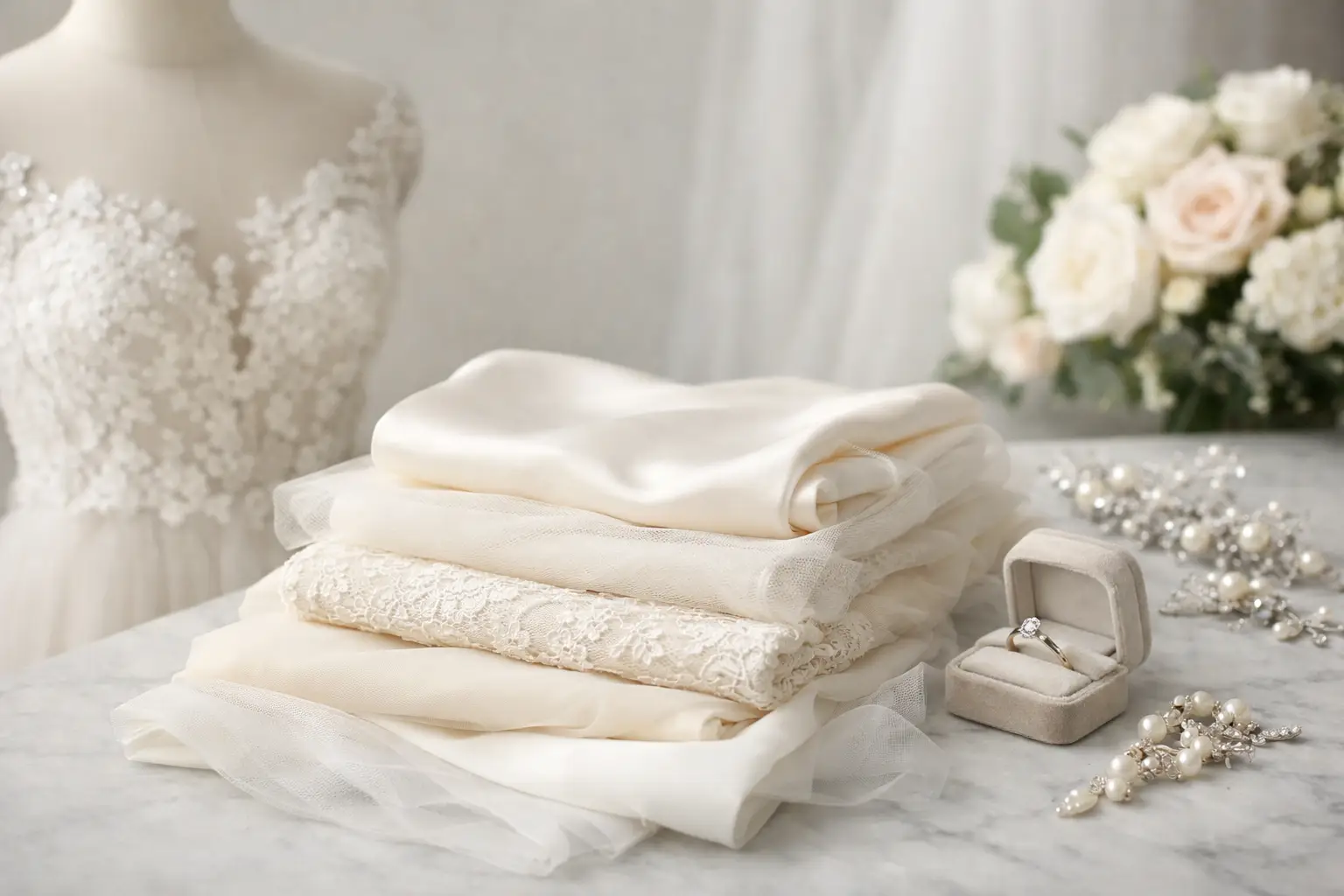
The fabric of a wedding dress is often what makes a gown feel completely different once it is on your body. Two dresses may share the same silhouette, neckline and even ivory shade, yet one feels light and effortless while the other feels structured, luxurious or wonderfully dramatic. That is why having the best wedding dress fabrics explained before your appointment can help you describe what you love with far more confidence.
Fabric affects more than appearance. It influences how a gown photographs, how it moves when you walk, whether it feels comfortable from ceremony to dancefloor, and how closely it skims or holds your shape. The right choice is personal – it should suit your style, venue, season and, above all, how you want to feel on the day.
Wedding dress fabrics explained: start with the feeling
Rather than choosing a fabric simply because it is traditional or trending, start with the mood you hope your dress will create. A grand country house celebration may suit the lustre and structure of satin or mikado beautifully. A relaxed garden wedding may call for soft tulle, airy chiffon or delicate lace. For a modern city celebration, clean crepe can feel quietly striking.
There is no fabric that is universally best. A fabric that gives one bride the confidence to make an entrance may feel too formal, warm or restrictive for another. During a bridal appointment, trying different fabrics is often the quickest way to turn a collection of Pinterest ideas into a clear direction.
Silk: luxurious, natural and beautifully fluid
Silk has long been associated with bridal luxury, and for good reason. It has a natural softness, a gentle sheen and a graceful drape that is difficult to replicate exactly. Depending on its weave, silk can look glossy, matte, crisp or fluid, making it exceptionally versatile.
Silk satin is smooth and luminous, while silk chiffon is light and floaty. Silk organza offers more crispness and volume without the weight of heavier fabrics. The appeal is often in the way silk moves: it responds beautifully as you walk and can feel wonderfully special against the skin.
The trade-off is that pure silk can be more delicate and may crease more readily than man-made alternatives. It can also sit at a higher price point. A silk gown is ideal for brides who value natural fibres and understated luxury, but it needs considered handling, especially if you are planning an outdoor ceremony or a long day of travelling between venues.
Satin: polished glamour with a smooth finish
Satin is not a fibre in itself but a weave, which means it can be made from silk, polyester or blended fibres. It is recognised by its smooth surface and light-catching finish, and it remains a favourite for brides who want a classic, elegant look.
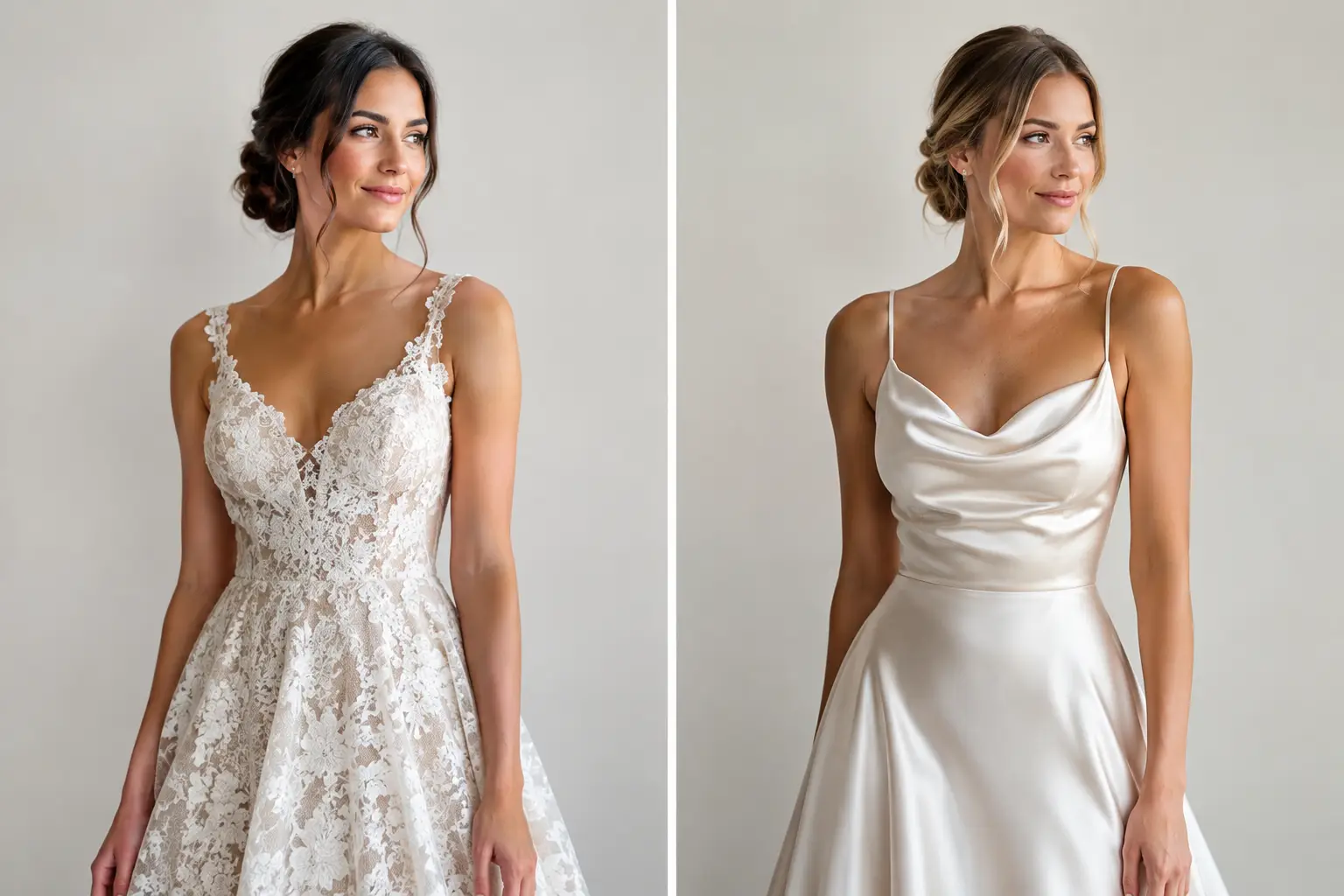
A satin wedding dress can be softly draped or more structured, depending on its weight. Lighter satin can create a sleek slip-style gown, while heavier satin gives skirts a more formal, sculpted shape. It is particularly lovely for clean A-line, ballgown and fit-and-flare silhouettes.
Because satin reflects light, it can highlight the lines of the body more than textured fabrics. This is not a drawback, but it is worth considering if you would prefer a more forgiving or matte finish. A well-fitted satin gown, with the right supportive construction beneath it, can feel incredibly confidence-giving.
Mikado: structure without excessive shine
Mikado is a heavier, more structured fabric, commonly made from silk or a silk blend. It has a subtle sheen rather than the pronounced gloss of traditional satin, and it holds its shape beautifully. Think clean pleats, architectural bows, defined waistlines and full skirts that keep their form.
This fabric is a lovely option for brides drawn to timeless styling with a fashion-led edge. It works particularly well for autumn and winter weddings, formal venues and gowns with pockets, statement trains or simple silhouettes where the quality of the fabric can take centre stage.
Mikado does have more weight than crepe, chiffon or tulle, so it may not be the most comfortable choice for a very hot destination wedding. However, many brides find its structure reassuring, especially when they want a gown that feels supportive and polished throughout the day.
Crepe: modern, soft and effortlessly elegant
Crepe has a matte surface and a distinctive soft texture. It is often used in contemporary bridal gowns because it drapes close to the body without looking overly shiny or fussy. A crepe dress can feel minimal, but never plain – the beauty lies in its clean lines, beautiful cut and movement.
This fabric is particularly suited to sleek column gowns, gentle fit-and-flare shapes and dresses with striking details such as low backs, elegant sleeves or a dramatic train. It is also a wonderful canvas for brides who want accessories, veils or statement earrings to play a bigger role.
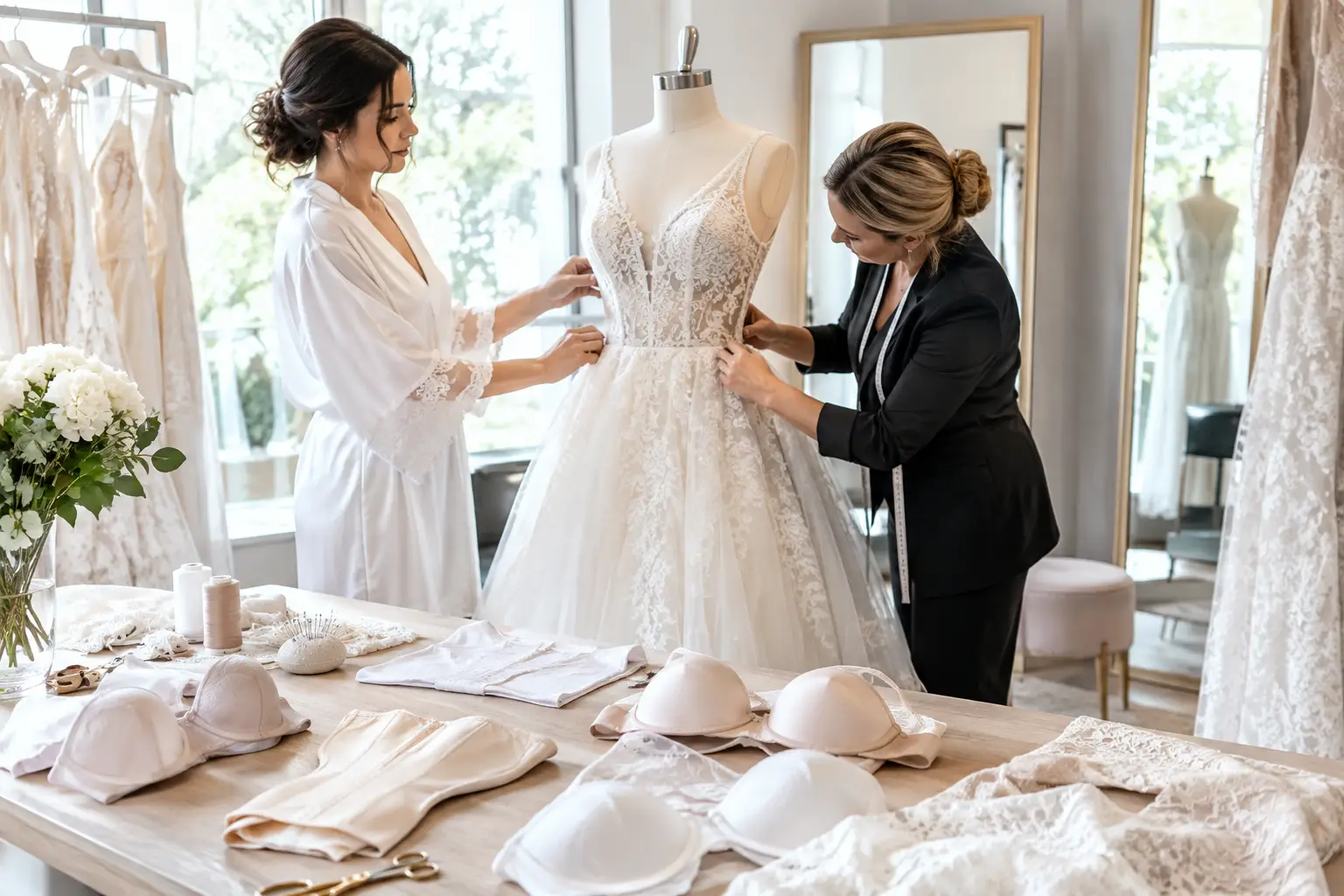
Not all crepe behaves in the same way. Some versions are weightier and more supportive, while others are lighter and more fluid. A quality bridal crepe should feel substantial enough to skim rather than cling. The fit is crucial, which is where thoughtful alterations make all the difference.
Lace: romantic detail with endless personality
Lace is one of the most recognisable wedding dress fabrics, but it comes in many forms. Fine Chantilly lace is soft, lightweight and delicately detailed. Guipure lace is bolder and more textured, often with a slightly modern, graphic effect. Floral appliqué lace can be scattered over tulle for a light, dimensional look or placed strategically to shape the bodice and skirt.
For brides who picture romance, softness or a little vintage influence, lace offers so much character. It can cover a full gown or appear only on sleeves, a bodice, the train or an illusion neckline. The pattern itself matters as much as the fabric: larger motifs can feel more statement-making, while smaller floral lace often feels more delicate.
Lace gowns are usually layered over another fabric, such as tulle, chiffon or satin. This affects their final look and feel. An ivory lace overlay on a nude-toned lining may make the detail stand out more strongly, while ivory on ivory creates a softer, more traditional effect.
Tulle and chiffon: lightness, movement and softness
Tulle is a fine net fabric used for skirts, veils, overlays and illusion details. Layered tulle creates wonderful volume without the heaviness of a densely structured skirt. It is a natural choice for romantic A-lines, soft ballgowns and gowns with floating, ethereal movement.
Tulle can be very soft or slightly firmer, depending on the type. Softer tulle feels gentle and fluid, while firmer tulle adds shape beneath a skirt. It can also be embroidered, glittered or covered with appliqué, allowing a dress to catch the light in a subtle or more dramatic way.
Chiffon is similarly light but has a smooth, woven finish rather than a netted one. It drapes beautifully and moves in the gentlest way, making it especially popular for beach, garden and summer weddings. It is less structured than satin or mikado, so it is best for brides who prefer a relaxed silhouette over a sharply defined one.
Consider the season, venue and your comfort
Your wedding dress fabric does not have to follow a strict seasonal rule, but practical details matter. Heavier mikado, satin and layered lace can feel beautiful for cooler months or formal venues. Chiffon, soft tulle and lighter crepe can be more comfortable in summer or abroad. Yet a winter bride may still adore chiffon sleeves, and a summer bride may fall for a satin gown – comfort comes down to construction, lining and how the dress feels on you.
Also think about movement. Will you be walking across grass, climbing stairs, travelling in a car or dancing late into the evening? A long, layered skirt can be magical, but you will want to know how it bustles and how it feels after several hours. A gown should support the day you are actually having, not just the first photograph.
Let the fabric guide the styling
The fabric of your gown can help shape the rest of your bridal look. A highly detailed lace dress may need only a simple veil and understated jewellery. A clean crepe or satin gown can carry a more dramatic veil, pearl accessories or a statement earring beautifully. Soft tulle pairs naturally with flowing hair and romantic florals, while structured mikado often suits a polished updo or sleek styling.
At Serena Bridal, our stylists often see brides arrive convinced they want one fabric, then fall in love with another once they see it in the mirror. That is part of the joy of trying gowns on: you can feel the weight, see the movement and discover which details make you stand taller.
Bring your inspiration, but leave room to be surprised. The fabric that feels most like you is often the one that turns a lovely dress into the dress you cannot stop thinking about.