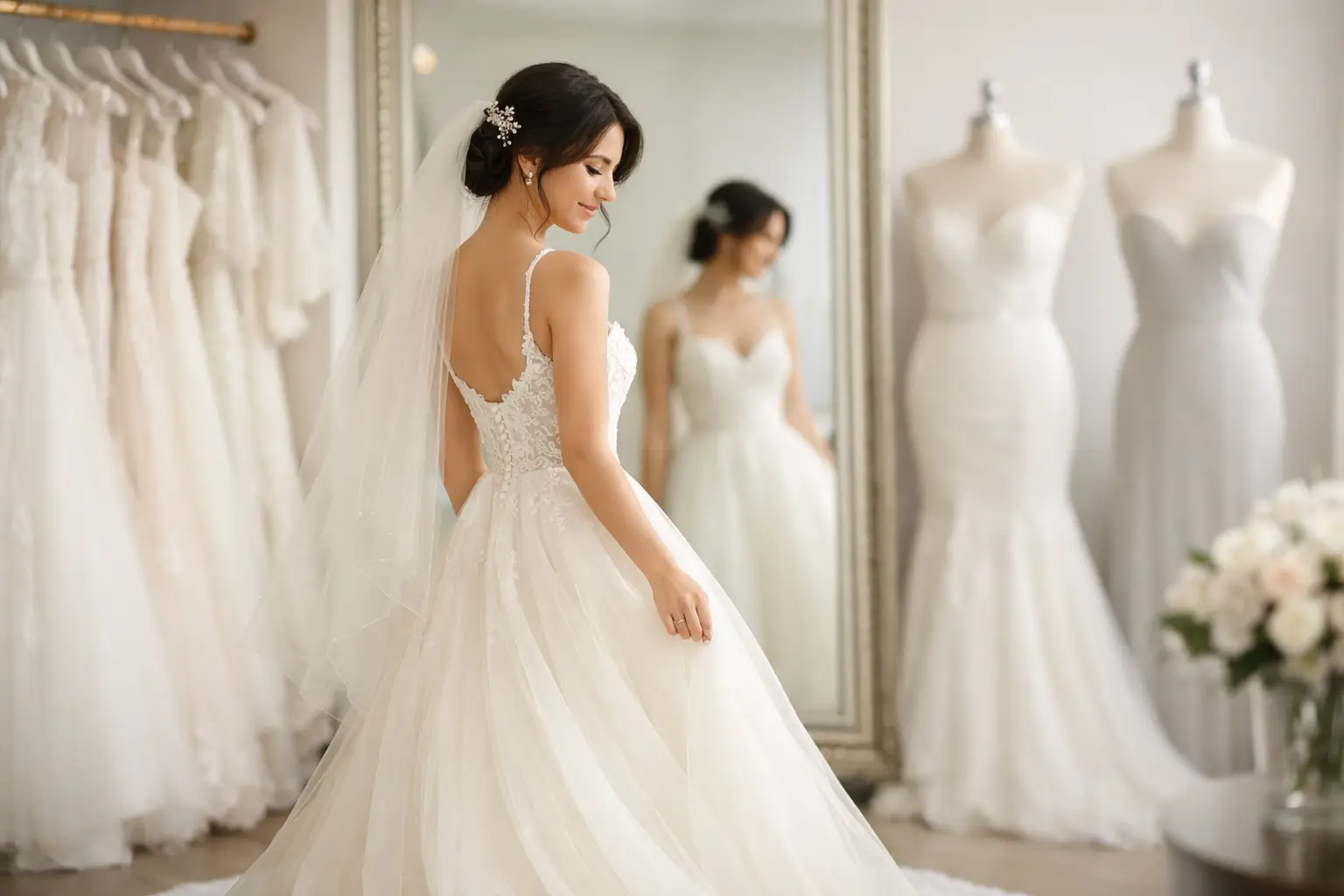

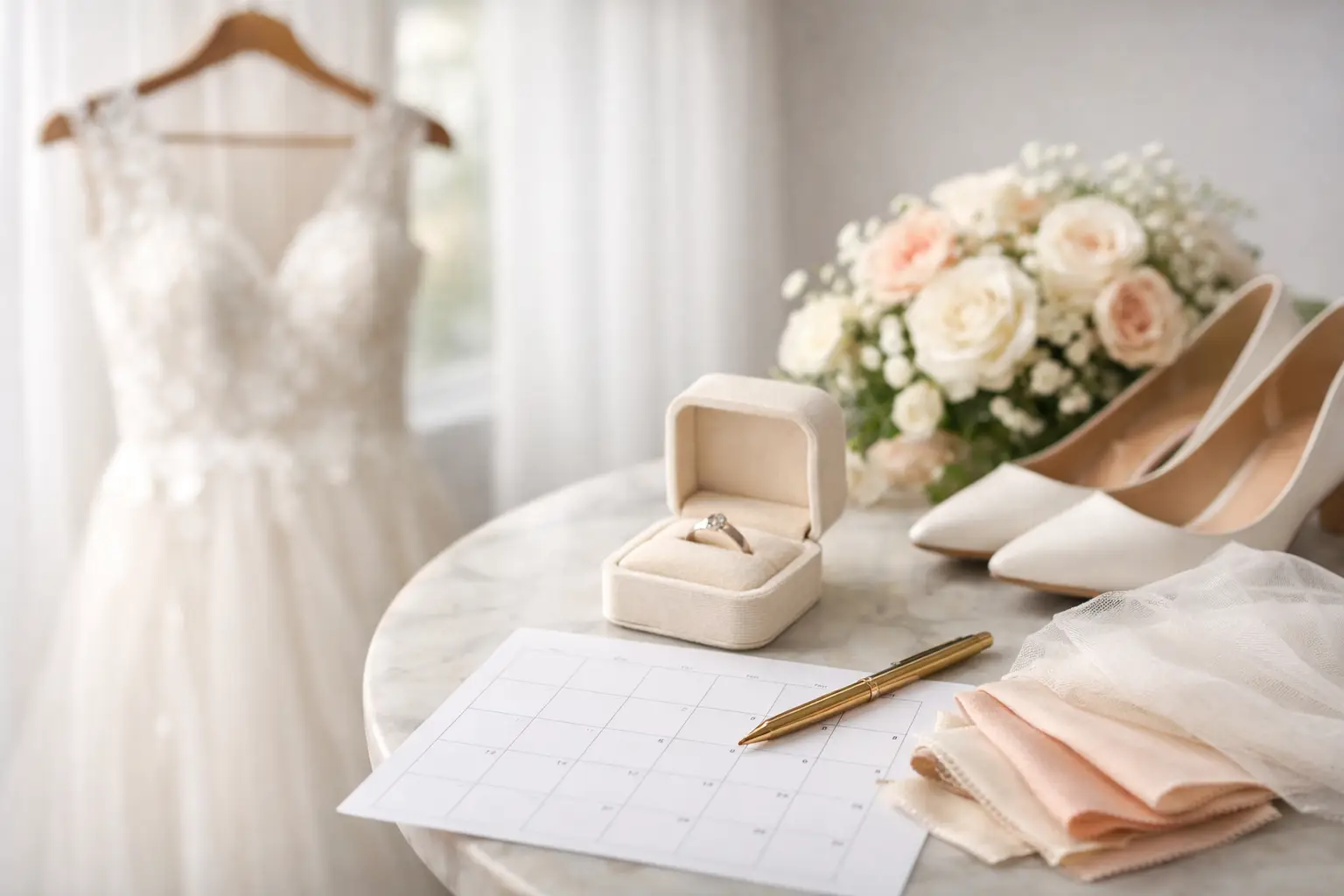
The moment you realise wedding dresses are ordered months ahead, not plucked from a rail a few weeks before the big day, the timeline suddenly feels very real. A good wedding dress timeline guide takes the pressure out of that moment. It helps you shop with confidence, leaves room for alterations, and gives you the best chance of finding a gown you truly love rather than settling because time is tight.
For most brides, the sweet spot for starting is around 12 to 18 months before the wedding. Bridalwear is not like everyday fashion. Many gowns are made to order, delivery dates can vary by designer, and alterations are nearly always part of the process.
Your wedding dress timeline guide from 18 months out
If you are 18 months or more from your wedding, you are in a strong position. This is the stage for inspiration, not pressure. Start gathering a sense of what you are drawn to – perhaps clean satin, soft tulle, structured crepe, long sleeves, a dramatic train, or something understated and modern.
This is also the time to think practically about the setting and season. A winter country house wedding may call for very different fabrics and styling from a summer garden celebration. The dress should still feel like you, but context matters. It can influence comfort, movement, and even how formal your look feels on the day.
When to start shopping seriously
Around 12 to 14 months before the wedding is often ideal for serious dress shopping. You have enough time to browse thoughtfully, revisit favourites if needed, and place an order without worrying that every week matters.
This is usually when your budget, venue and overall styling direction are becoming clearer. That makes appointments far more productive. A stylist can guide you towards gowns that suit your shape, your celebration and the level of detail you want, while also being honest about lead times and what is realistic.
If you are shopping with guests, keep the group small. A bride usually gets better clarity with one or two trusted people than with a full panel of opinions. Support is lovely. Too many voices can make a very personal choice feel confusing.
The best time to order your gown
For a made-to-order gown, placing your order 9 to 12 months before the wedding is a very comfortable timeframe. Some designers may deliver sooner, while others need longer, especially during busy periods. This is why a wedding dress timeline guide should always allow some breathing room rather than relying on best-case timings.
Ordering earlier gives you more freedom. You are not limited to what can arrive quickly, and you are less likely to face rush fees or compromise on your first choice. It also leaves space for the unexpected. Production schedules can shift, fabrics can be delayed, and life does not stop just because you are planning a wedding.
If you find your dress much earlier than expected, that is absolutely fine too. Once you know, you know. The right gown often brings a calm certainty with it.
What happens after you order
One of the biggest misconceptions is that ordering the dress means the work is done. In reality, there are still a few stages ahead. Your gown will usually arrive several months later, and once it does, you will move into fittings and alterations.
This is also a good point to think about accessories, but not necessarily to buy everything at once. Veils, hair pieces and jewellery should complement the gown rather than compete with it. It is much easier to choose well when you know the exact neckline, fabric and level of embellishment.
Shoes matter earlier than many brides expect. Your seamstress will need to know the correct hem length, so having your wedding shoes, or at least the right heel height, before alterations begin is important.
Wedding dress timeline guide for alterations
Alterations usually begin around 8 to 12 weeks before the wedding, though this can vary depending on the gown and the seamstress. Most brides will have two or three fittings. The first fitting often focuses on the main structural adjustments – taking in the bodice, refining the waist, checking bust support, and marking the hem.
Closer to the wedding, later fittings fine-tune the fit. This is when the dress starts to feel truly yours. It is also when practical details are sorted, such as bustling or hooking up the train if needed.
Try not to leave alterations too late. A rushed fitting schedule can add avoidable stress, especially if your gown needs more detailed work like lace repositioning, sleeve adjustment or reshaping through the hips. Equally, alterations should not start too early if your weight is likely to change. Timing matters because the best fit comes from working at the right point, not simply the earliest one.
If your wedding is sooner than expected
Not every bride has a year to plan. Some weddings come together in six months, four months, or even less. That does not mean finding the right dress is out of reach. It simply means your route may be different.
In a shorter timeframe, off-the-peg gowns, sale dresses and selected quick-delivery options can be excellent choices. These are not second-best solutions. Very often, they allow brides to take a beautiful designer gown home far sooner and at a more accessible price point too.
The main consideration is flexibility. If your date is close, it helps to be open-minded about samples, existing stock, and styles that need fewer changes. A boutique with experienced stylists can quickly steer you towards dresses that work both aesthetically and logistically.
Three months before the wedding
By the three-month mark, your dress should ideally be in hand and your first alteration fitting either booked or already complete. If you still have not found your gown at this point, do not panic, but do act quickly and decisively.
A focused appointment is much more useful than endless browsing. Go in with your budget, venue details and a willingness to trust expert guidance. When time is short, confidence and clarity matter more than seeing every possible option.
This is also the right time to finalise your underwear if your gown requires specific support, and to practise moving in your shoes. Small things make a difference. You want to sit, walk and dance comfortably, not just stand beautifully.
One to Two weeks before the wedding
By now, your dress should be ready for collection and you should know exactly how to store and transport it. Keep it in a breathable garment bag and somewhere safe, dry and away from pets, cooking smells and general household chaos.
If your dress has a long train or delicate fabric, make sure someone close to you knows how to handle it on the day. If there is a bustle or a pin, ask for a simple demonstration and consider recording it on your phone. These are small practical steps, but they can save a surprising amount of fluster on the morning.
Avoid unnecessary try-ons in the final days. Once the dress is fitted and ready, it is best left protected until it is time to get dressed.
A realistic timeline, not a perfect one
The most helpful wedding dress timeline guide is not about rigid rules. It is about understanding where you have choice, where you need to be organised, and where expert support makes all the difference.
Some brides buy their gown a year ahead and love every minute of the process. Others arrive with a shorter deadline and still find something perfect with the right boutique support. The key is not whether your journey looks textbook. It is whether your timeline gives you enough room to make decisions calmly and enjoy this part of planning.
At Serena Bridal, we often see the change that happens when a bride moves from feeling uncertain to feeling looked after. That is what the right timing can do. It creates space for excitement, reassurance and a dress that feels like it was always meant to be yours.
If you are just starting, begin sooner than you think you need to. Future you will be very glad you did.