
Your wedding dress may spend months waiting quietly for its moment, then become one of the most treasured pieces in your wardrobe after the celebrations. If you are searching for “how to store wedding dress”, the answer is not simply to put it back in its garment bag. The right approach protects delicate fabric, preserves its shape and keeps avoidable marks, moisture and yellowing at bay.
Whether you are storing your gown before the wedding, taking it away for a destination celebration or preserving it afterwards, a little thoughtful preparation makes a real difference.
Before the wedding: keep your gown safe and ready
Once your dress has arrived at home, it is tempting to peek at it regularly. We understand completely. Still, the less it is handled before the day, the better. Clean hands, a calm storage spot and a proper hanger will protect your gown while you count down to the wedding.
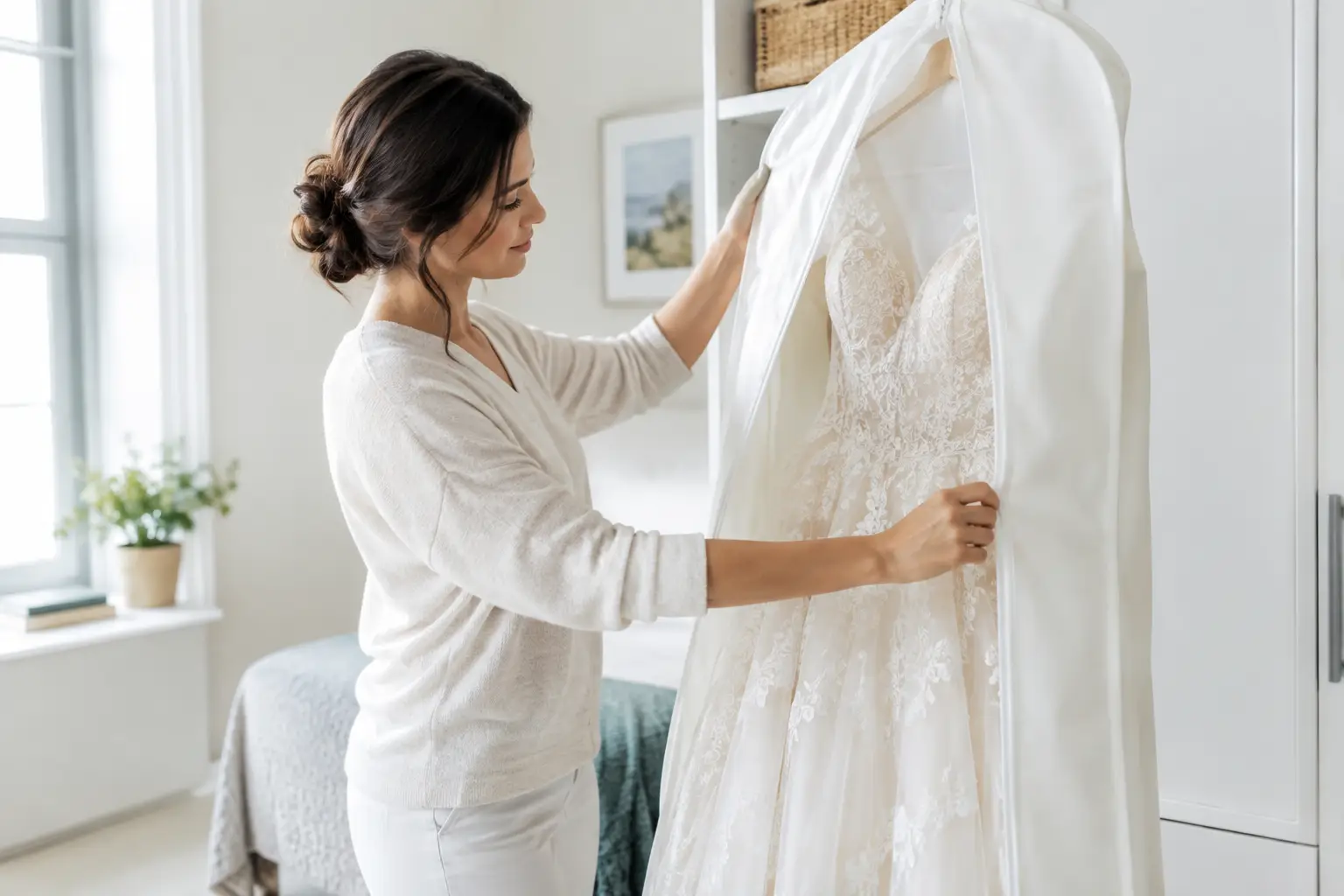
For most dresses, hanging is appropriate before the wedding, particularly where the boutique has supplied a supportive hanger and a breathable garment bag. Keep the dress fully fastened inside the bag, with enough room around it that the skirt is not tightly compressed. If the train is long or the gown is heavily beaded, ask your bridal stylist how they recommend supporting its weight. A delicate strap or loop should never be expected to carry a heavy gown for months.
Choose a cool, dry room in your home, away from direct sunlight, radiators and humid areas. A spare bedroom or wardrobe in a well-ventilated room is usually far better than a loft, garage, shed or cellar. These spaces can experience sharp changes in temperature and moisture, which are unkind to silk, lace, tulle and embellishment.
It is also wise to keep your dress away from cooking smells, scented candles, perfume and pets. Fabric can absorb odours surprisingly easily, and perfume or hairspray should be applied well away from the gown on the morning of your wedding.
Avoid plastic covers for long periods
A clear plastic cover may seem protective, but it can trap moisture and prevent the fabric from breathing. This increases the risk of mildew or discolouration, particularly in a warm wardrobe. A breathable fabric garment bag is the more reassuring choice for short-term storage before your wedding.
If your gown came with tissue paper around the bodice, sleeves or embellishments, leave it in place unless your stylist has advised otherwise. It has often been positioned to prevent snagging and rubbing during transport.
Travelling with your wedding dress
If you are getting married abroad or need to take your gown to a venue some distance away, plan its journey in advance. The ideal method depends on the dress fabric, volume and transport arrangements, so do ask during your alterations appointment. A structured mikado gown needs different care from a soft chiffon dress, for example.
For a car journey, lay the dress carefully across clean rear seats or hang it from a secure hook only if it will not drag, crease heavily or obstruct the driver’s view. Keep food, drinks, flowers with damp stems and pets well away from it. On arrival, hang the gown immediately in a dry, private room.
For air travel, check your airline’s current cabin-baggage rules before you leave. Some airlines may allow a wedding dress to be carried or placed in an onboard wardrobe, while others cannot guarantee this. Never rely on a promise made informally at the airport. A specialist travel box or hand-luggage-sized dress bag can be useful for certain gowns, but only if your bridal boutique confirms that folding is suitable for your particular dress.
If the dress does crease, do not reach for an iron. Heat can damage fibres, flatten texture or affect appliqué and beading. Gentle steaming by a professional, or carefully following the fabric guidance provided with your gown, is the safer route.
How to store a wedding dress after the big day
After the wedding, your dress may carry more than happy memories. The hem can collect dust or grass, and invisible marks from prosecco, cake, makeup or perspiration may oxidise over time and become more noticeable. Even a dress that looks immaculate should be cleaned before long-term storage.
Arrange specialist wedding dress cleaning as soon as you can, ideally within a few weeks. Tell the cleaner about any spills, outdoor photographs, fake tan, marks around the neckline or areas of particular concern. A specialist will assess the fabric, lining, lace, beading and embellishments before choosing the cleaning method. General dry cleaning is not always the right option for every bridal gown.
Once cleaned, long-term preservation is usually best done flat rather than hanging. The weight of a skirt, train or detailed bodice can cause stretching over the years, particularly on lighter fabrics and fine straps. A preservation box made from acid-free materials gives the dress support while helping protect it from light, dust and unwanted chemical transfer.
Pack the gown with acid-free tissue paper
For boxed storage, the gown should be gently folded with layers of acid-free, unbuffered white tissue paper between folds. This reduces hard creases and stops fabric surfaces rubbing together. The bodice, sleeves and any structured areas need particular care, while the train should be folded loosely rather than sharply.
Do not use coloured tissue, ordinary wrapping paper, cardboard boxes, newspaper, bubble wrap or vacuum-storage bags. These materials can transfer colour, hold moisture or create permanent compression lines. Vacuum bags are excellent for duvets, but they are not a kind home for silk, lace, tulle or carefully constructed bridalwear.
If you are preserving the dress yourself, wear clean cotton gloves or wash and dry your hands thoroughly first. Avoid applying hand cream immediately beforehand. Handle the gown only as much as necessary and work on a clean, spacious surface.
Find the right place for long-term storage
A preservation box belongs in a stable indoor environment. Think of a dry wardrobe shelf, under a bed in a heated room or a cupboard away from exterior walls. The aim is consistency, rather than a particular temperature.
Avoid lofts, garages, cellars and storage units unless you know they are climate-controlled. They are often prone to damp, extreme cold, heat or pests. A beautiful dress can be damaged gradually in these conditions, long before the problem is visible from the outside.
Keep the box away from windows and do not stack heavy items on top of it. Sunlight can fade fabric, while pressure may crush delicate flowers, boning or beadwork. If you have space, store the box flat and make sure it remains dry.
Should you check your dress occasionally?
Yes, but gently. Every year or two, open the box in a clean, dry room and look for signs of moisture, insects or discolouration. Refold the gown along slightly different lines if the preservation instructions allow it, adding fresh acid-free tissue where needed. This helps reduce the chance of permanent creasing at one fold.
Try not to inspect it too frequently or unpack it for every anniversary. Each handling session brings a small risk of snagging, makeup transfer or accidental spills. A quiet check is enough to give you peace of mind.
When to ask for professional advice
Some gowns need more individual care than others. Dresses with antique lace, silk, feathers, extensive beading, detachable overskirts or dramatic trains are worth discussing with an experienced bridal professional before you pack them away. The same applies if you hope to alter, restyle or pass your gown on in future.
At Serena Bridal, we always encourage brides to ask questions about caring for their particular gown. The fabric, construction and details matter, and personalised advice is often more useful than a one-size-fits-all rule.
Your dress has been part of a day you will remember for years. Store it somewhere calm, clean and dry, and give it the same thoughtful care you gave when choosing it.