
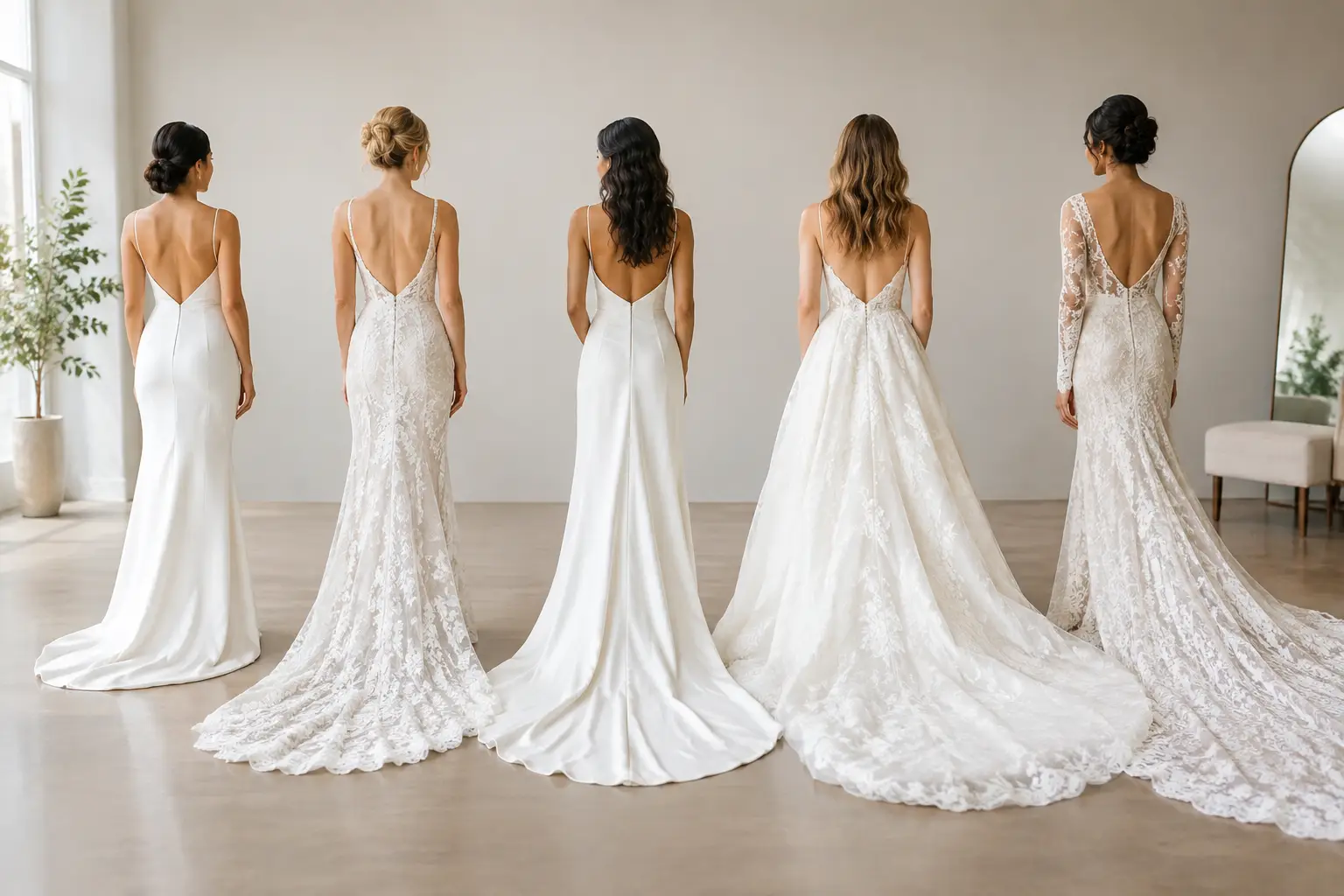
A train can transform the feeling of a wedding dress the moment you step into it. It adds movement, occasion and a little drama, but the right choice is not always the longest one. This dress train guide will help you understand the most popular lengths, how they work during your day and what to consider before you fall in love with a gown.
The best train for you should suit your venue, your ceremony plans and the way you want to feel. Some brides want a grand entrance and photographs that make the most of a sweeping skirt. Others want the freedom to move easily from ceremony to dance floor. Both are completely valid, and there is a beautiful balance to be found.
Why a dress train changes the overall look
A train is the section of fabric that extends behind the dress, beginning at the back of the skirt. It can be created through the cut of the gown itself, or added with a detachable overskirt or statement veil. Even a subtle train can make a simple crepe gown feel distinctly bridal, while a longer train can bring extra impact to a lace, satin or ballgown silhouette.
It also affects how the dress moves. A soft tulle train may float behind you as you walk, whereas a structured mikado or satin train will hold a more defined shape. Neither is better. The key is choosing a finish that feels in keeping with your personal style and the atmosphere of your wedding.
Dress train guide: the main lengths
Sweep train
A sweep train, sometimes called a brush train, is the shortest traditional option. It just skims the floor behind the gown, creating a gentle extension without feeling formal or cumbersome. It is a lovely choice for registry office ceremonies, relaxed celebrations, city weddings and brides who would like a little train without needing much management.
Because it remains close to the ground, it can still pick up marks outdoors or on wet ground. However, it is generally easier to walk in than a longer style and often needs a simpler bustle for the evening.
Court train
A court train extends a little further than a sweep train, usually around 30 to 45 centimetres beyond the hem. It gives a graceful, traditional outline without dominating the dress. This length works particularly well for venues with a more formal setting, such as a country house, manor or elegant hotel.
For brides who feel torn between practicality and occasion, a court train is often a reassuring middle ground. You will see the difference in photographs and as you walk down the aisle, but you are unlikely to feel that the train is wearing you.
Chapel train
A chapel train is one of the most popular choices in bridal boutiques. Typically extending around one metre behind the dress, it has enough presence to look wonderful in ceremony photographs while still being manageable with a bustle later in the day.
This length suits a wide range of silhouettes, from fitted gowns and A-lines to fuller skirts. It can feel romantic with soft lace appliqué, striking in clean satin, or effortlessly modern in plain crepe. If you want a classic bridal look that will not feel overly formal, chapel length is often a strong place to start.
Cathedral train
A cathedral train is made for a dramatic entrance. It extends well beyond a chapel train and creates a memorable sweep of fabric behind you. It is especially suited to larger churches, stately venues and ceremonies where there is a long aisle or a generous space for the train to be arranged.
There is a practical trade-off. Cathedral trains need a little more attention when you walk, turn and pose for photographs. You may want a bridesmaid or page boy to help straighten it before the ceremony begins, and a well-planned bustle is essential for the reception. If the grandeur makes you feel wonderful, that extra care can be more than worth it.
Royal train
A royal train is the longest and most ceremonial option. These are rarely chosen for intimate weddings, but they can be extraordinary for a highly formal celebration with a spacious setting. The train becomes a key feature of the dress, so it needs to work with the scale of the venue rather than compete with it.
For many brides, a cathedral-length veil paired with a chapel train offers a similar sense of drama with more flexibility. It is worth trying both combinations during your appointment rather than assuming a longer gown train is the only route to a statement look.
Match your train to your venue and plans
Your wedding setting matters as much as the dress itself. A long train can look breathtaking on the steps of a country estate or down the aisle of a church, yet it may be less practical for a beach ceremony, a woodland celebration or a venue with lots of gravel paths. That does not mean you need to rule it out. It simply means planning for the surfaces you will encounter and being realistic about the hem getting marked during the day.
Think, too, about the pace of your celebration. If you are planning a formal ceremony followed by a seated wedding breakfast, you may have more opportunity to enjoy a longer train before it is bustled. If your day includes garden games, a busy drinks reception and plenty of dancing, a shorter train or detachable option may feel more comfortable.
Your photographs are another consideration. A longer train gives your photographer more fabric to arrange for those beautiful back-of-dress images. A veil can add length and movement without committing you to a very long skirt all day. If photographs are a priority, ask to see how a gown looks with different veil lengths before deciding.
What is a bustle and do you need one?
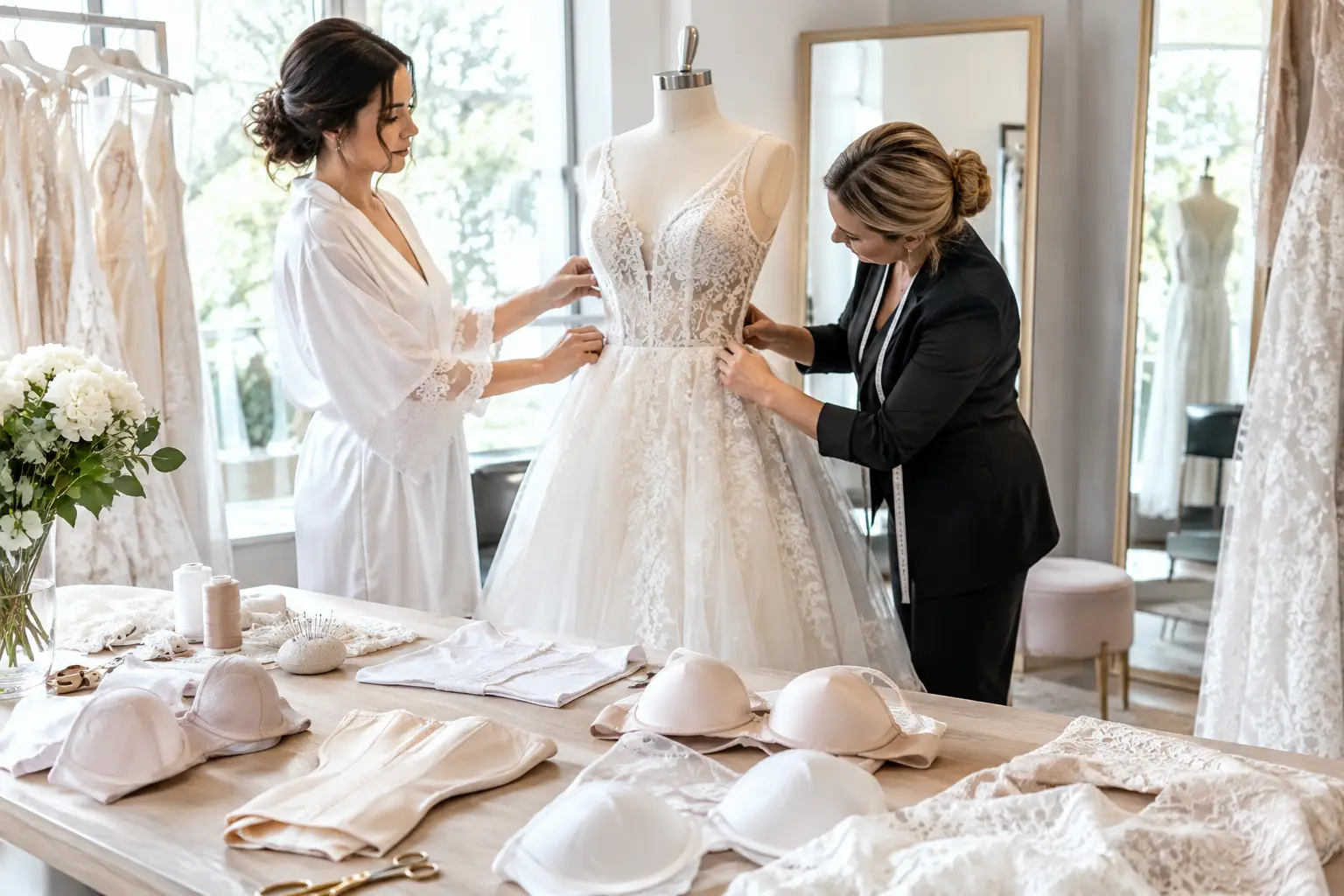
A bustle is a set of discreet hooks, buttons, ribbons or loops added during alterations to lift the train off the floor after your ceremony. It keeps the back of your dress tidy and makes it much easier to mingle, eat and dance.
Most dresses with a noticeable train benefit from one, although the right bustle depends on the fabric, silhouette and train shape. A heavier satin gown may need a different solution from a lightweight tulle A-line. Your seamstress can advise on the most flattering approach, while your bridal stylist can help you consider this from the moment you choose the dress.
During your final fitting, bring along someone who will be with you on the wedding day and ask them to learn how the bustle works. A quick video on their mobile phone can be helpful, particularly if the gown has several fastening points. Allow a few minutes after the ceremony for this change, and do not be afraid to ask for assistance.
Choosing a train that still feels like you
It is easy to be drawn to the drama of a train when you first see it in the mirror. Give yourself a moment to walk, sit, turn and imagine wearing it for several hours. Does it make you stand taller? Can you picture yourself greeting guests comfortably? Are you excited by the extra fabric, or are you already worried about it?
There is no rule that says a formal venue requires a cathedral train, or that a relaxed wedding calls for a short one. A minimalist bride may adore a long, architectural satin train. A bride holding a garden wedding may choose lace and a chapel train because it feels like the dress she has always imagined. Personal comfort and confidence should lead the decision.
A detachable train or overskirt can be a wonderful alternative if you want two looks. You can wear it for the ceremony and portraits, then remove it for the reception to reveal a sleeker gown beneath. This can also give you the impact of a fuller or longer silhouette without carrying that volume into the evening.
Try the dress from every angle
When you are trying gowns, ask to see the back as carefully as the front. Stand at a distance from the mirror, look at how the train begins at your waist or hips, and watch how it falls when you walk. Consider the scale of any lace detail, buttons or appliqué. A train should feel like a natural continuation of the gown, not an afterthought.
At Serena Bridal, a two-hour appointment gives you time to explore these details without rushing. An experienced stylist can help you compare train lengths across different silhouettes, talk through bustle options and find the level of drama that feels entirely right for your day.
Choose the train that makes your walk towards your ceremony feel special, then make sure it supports the celebration that follows. When a dress is beautiful, comfortable and suited to your plans, you can stop thinking about the fabric behind you and simply enjoy the moment ahead.