
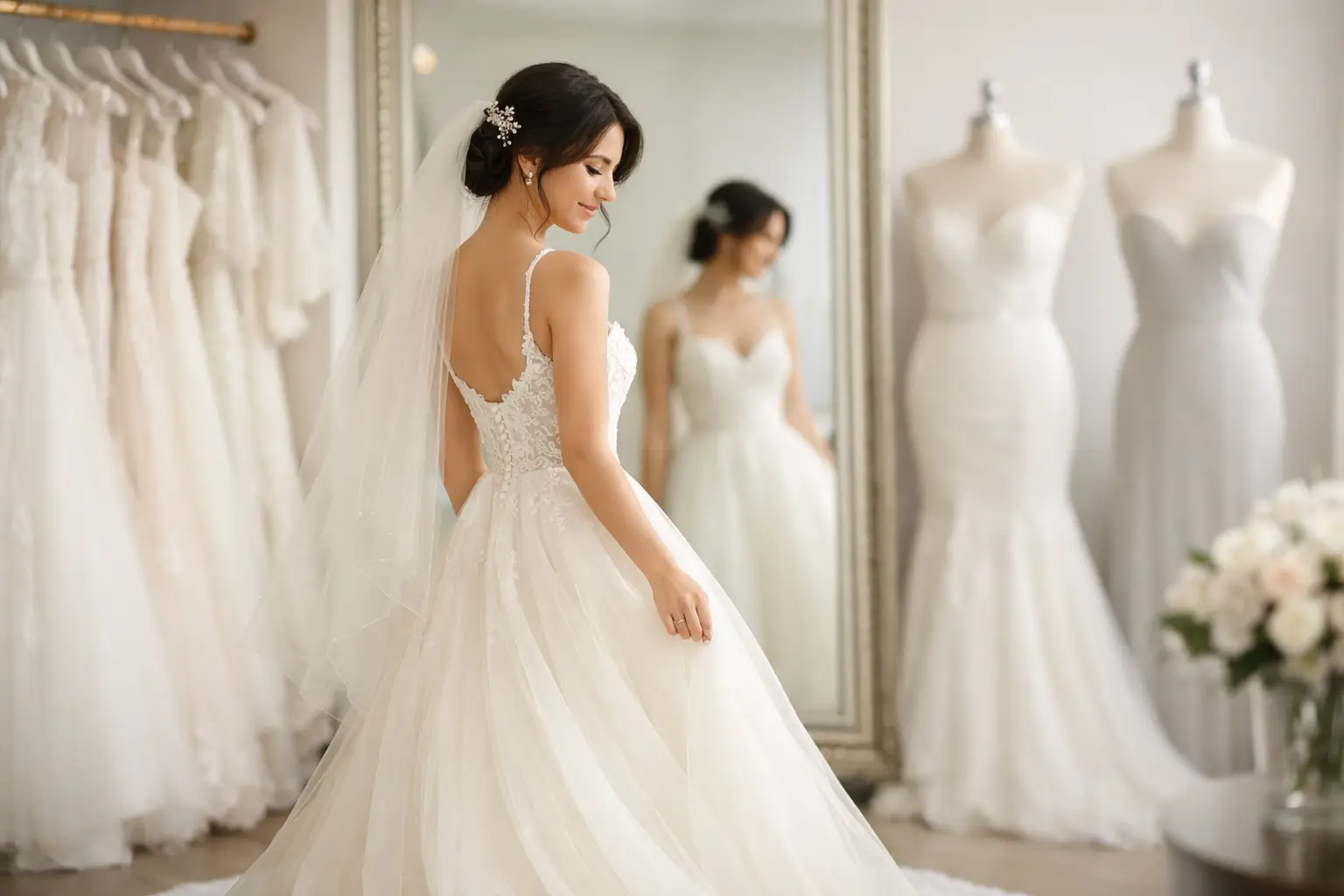
A wedding dress that feels made for you is never about following a rulebook. The best wedding dress styles for petite brides are simply the ones that create beautiful proportion, allow you to move comfortably and make you feel completely yourself when you catch your reflection. Height is one consideration in styling, but it should never limit your bridal vision.
At a bridal appointment, the most useful question is not “What am I allowed to wear?” but “What do I love, and how can we make it work for me?” The right silhouette, carefully considered detailing and professional alterations can make an enormous difference. A petite bride can look wonderful in a clean, modern column gown, a full romantic skirt or a fitted lace dress – it is all about balance.
What makes a wedding dress flattering for a petite frame?
For brides who are shorter in height, proportion often matters more than the label attached to a silhouette. A gown that lengthens the line of the body, defines the waist in the right place and does not overwhelm the frame can feel especially harmonious. This may mean a skirt with movement rather than excessive bulk, a waistline that sits naturally rather than too low, or embellishment placed to draw the eye upwards.
That said, flattering does not have to mean making yourself look taller. Some brides want that elongated effect, while others are drawn to volume, sparkle or dramatic sleeves. Your wedding dress should reflect your personality and the feeling you want for your day. A skilled stylist can help you explore the difference between a dress that is simply beautiful on the hanger and one that feels beautifully balanced on you.
Best wedding dress styles for petite brides
A-line gowns: a beautifully balanced choice
An A-line wedding dress is often a lovely starting point for petite brides. Fitted through the bodice before gently flowing away from the waist, it creates a clean, elegant shape without the weight of an exceptionally wide skirt. The gradual line of the skirt can give the body a longer appearance, particularly when paired with a defined waist and a well-fitted bodice.
A-line gowns are also wonderfully versatile. Soft chiffon, sleek crepe, layered tulle and delicate lace can all create very different looks within this silhouette. If you are planning a relaxed countryside celebration, a lighter A-line may feel effortless. For a more formal venue, structured mikado or satin can bring a polished, timeless presence.
Column and sheath dresses: understated and lengthening
A column or sheath wedding dress follows the body more closely, creating one continuous vertical line. For petite brides who love a minimalist, contemporary look, this can be an exceptionally flattering option. Crepe is particularly popular for this style because it skims rather than clings when the fit is right, and it offers a refined finish that photographs beautifully.
This silhouette does ask for careful fitting. A dress that is too loose can lose its clean line, while one that is too tight may restrict movement. It also tends to be less forgiving of a bodice or hem that has not been altered precisely. With expert adjustments, however, a simple gown can look strikingly elegant and feel wonderfully easy to wear.
Fit-and-flare gowns: shape with a little drama
Fit-and-flare and trumpet gowns can be a gorgeous choice if you would like to celebrate your curves while keeping a defined silhouette. These dresses follow the body through the bodice and hips before opening out around the thigh or knee. The result can create a long, sculpted line, especially with thoughtfully placed seams, lace patterns or buttons running down the back.
The point where the skirt begins to flare is key. A flare that starts very low can create a dramatic look, but it may also feel restrictive or alter the overall proportions depending on your shape. A softer fit-and-flare, opening slightly higher, is often easier to move in and can offer a more balanced effect. This is exactly the sort of detail that becomes clear once you are trying dresses on rather than judging photographs online.
Empire-line dresses: soft, romantic and comfortable
An empire waist sits just below the bust, with the skirt falling gently from that point. This style can create the impression of longer legs and has a light, romantic quality that suits many intimate, destination or summer weddings. Flowing fabrics such as chiffon and soft tulle work particularly well, giving the dress movement without adding visual weight.
Not every empire-line gown is the same. A high waist that sits in the wrong position can feel less natural, so the bodice must be beautifully fitted. Brides with a fuller bust may also prefer additional structure or supportive straps. The right version is graceful and comfortable, rather than overly loose or shapeless.
Ballgowns: yes, petite brides can wear them
One of the most persistent bridal myths is that petite brides should avoid full skirts. In reality, a ballgown can be utterly magical if it is designed with proportion in mind. A fitted, structured bodice helps define the waist, while a skirt with layers arranged carefully can create drama without swallowing the bride within it.
If you love the romance of a ballgown, try a few variations rather than dismissing the style. Look for a skirt that begins at your natural waist, a bodice that does not feel too long through the torso and detailing that remains in scale with your frame. A cathedral-length train may be exactly what you have always imagined, or you may find that a manageable train gives you the same sense of occasion with greater ease throughout the day.
Necklines, waistlines and details that shape the overall look
Silhouette is only one part of the picture. Necklines can subtly change the balance of a gown: a V-neck, sweetheart neckline, square neck or elegant off-the-shoulder design can all work beautifully, depending on your proportions and how supported you feel. A lower neckline can create a longer vertical line, while a square neckline brings a chic, modern structure to the bodice.
Waist placement deserves equal attention. A natural waist is often a reliable choice, but a slightly raised waist can lengthen the lower body, particularly on an A-line gown. Be cautious with dropped waists if you have a shorter torso, as they can make the bodice feel too long. This is not an absolute rule, though. If a dropped-waist dress makes you feel sensational, a stylist can assess whether small alterations will perfect its proportions.
When it comes to embellishment, scale is useful to consider. Fine lace, delicate beading and vertical appliqué can all complement a petite frame. Larger floral motifs, very wide belts or heavy decoration concentrated around the hips may feel more dominant, but they can still work if the rest of the gown is clean and well balanced. The aim is not to avoid detail – it is to make sure the detail supports the dress rather than competing with you.
Fabric, trains and sleeves: the finishing choices matter
Heavier fabrics such as satin and mikado give shape and structure, making them ideal for brides who want a more architectural gown. Softer fabrics like chiffon, tulle and crepe offer fluidity and can feel lighter on the body. Neither is automatically better for petite brides. A petite bride who dreams of crisp satin should not feel obliged to choose floaty chiffon, just as a bride who wants a relaxed dress should not be steered into a structured skirt.
Trains and sleeves deserve a try-on moment, too. A long train can be breathtaking, but it adds visual and physical weight, so it is worth walking, turning and sitting in it before deciding. Sleeves can create elegant length through the arms, especially in sheer fabrics, while very voluminous puff sleeves may shift the focus upwards. Again, it depends on the gown and the look you love.
Alterations are where the dress becomes yours
Most wedding dresses need alterations, whatever a bride’s height. For petite brides, adjusting the hem is only the beginning. Bodice length, shoulder position, waist placement, straps and the point where a skirt begins to flare can all influence how a gown sits and moves.
This is why it is valuable to choose a boutique experience where styling and fit are considered together from the beginning. At Serena Bridal, your appointment gives you time to explore different silhouettes with the guidance of an experienced stylist, rather than feeling rushed towards a decision. A gown may not look like your imagined dress at first glance, but the right fit and thoughtful styling can make it the one.
Bring the shoes you are considering for the day when you can, or choose a heel height early in the alterations process. Your final hem depends on it. It is also helpful to try your chosen underwear and accessories with the gown before final fittings, as these details can affect both comfort and proportion.
The most memorable bridal look is not the one that follows every supposed petite-bride rule. It is the one that lets you stand a little taller because you feel supported, comfortable and completely delighted to wear it.