
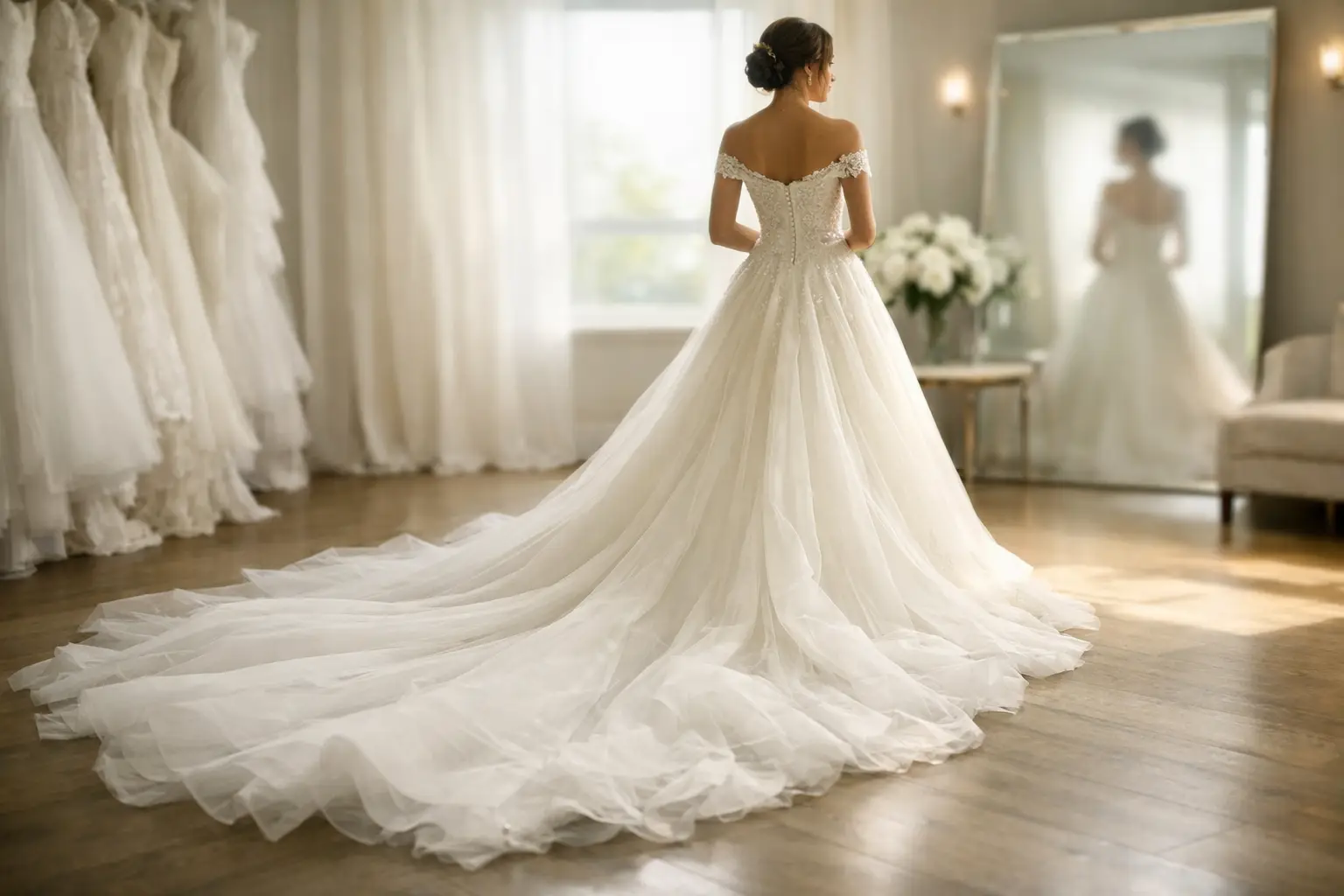
A train can change the whole feeling of a wedding dress. It may bring soft movement to a simple crepe gown, add romance to flowing tulle, or create the formal entrance you have always imagined. This guide to wedding dress trains will help you understand the options, from subtle trailing hems to dramatic cathedral lengths, so you can choose with confidence rather than simply falling for a beautiful photograph.
The right train is not only about how a dress looks when you first step into it. It is also about your ceremony setting, how you plan to move through the day, whether you want to dance freely in the evening, and what feels most like you. A longer train can be wonderfully dramatic, but a shorter one may be the choice that lets you feel relaxed from the aisle to the last dance.
A guide to wedding dress train lengths
Train names are helpful starting points, although exact measurements can vary between designers and dress sizes. Your stylist can show you how the train sits on your own frame, which is far more useful than judging length on a hanger.
Sweep and brush trains
A sweep, sometimes called a brush train, extends only slightly beyond the hem. It gently skims the floor behind you, creating movement without a formal, extended look. This is a lovely choice for a registry office ceremony, a relaxed barn wedding or a bride who wants a clean, contemporary silhouette.
It is also one of the easiest styles to manage. There is less fabric to gather after the ceremony and less chance of it catching on uneven ground. A sweep train can still feel special, particularly in satin, lace or a gown with a detailed hem, but it will not dominate the dress.
Court trains
A court train is a little longer, usually extending around 30 centimetres from the waistline or hem depending on the gown’s design. It offers a graceful sense of occasion without the volume and reach of a chapel train.
For many brides, this is a happy middle ground. It photographs beautifully at the ceremony and gives the dress a bridal finish, while remaining practical for venues where you will be walking between rooms or greeting guests closely after your vows.
Chapel trains
Chapel length is one of the most popular choices for a traditional bridal look. It generally extends around one metre behind the gown, though the effect varies greatly according to fabric. A lightweight chiffon train may float behind you, while structured mikado or layers of tulle will create a more defined shape.
A chapel train suits church ceremonies, country houses and elegant hotel weddings particularly well. It has enough length to make an impact in photographs, but with a well-planned bustle, it can be comfortably lifted for the reception.
Cathedral and royal trains
A cathedral train is designed for drama. Often two metres or more in length, it creates a striking aisle moment and is especially at home in a grand church, historic venue or spacious stately setting. A royal train extends even further and is generally reserved for the most formal celebrations.
These trains are breathtaking, but they need consideration. Someone may need to arrange the train before you walk down the aisle, and your photographer will need room to capture it at its best. If your ceremony includes steps, gravel paths or a long journey between locations, think carefully about how much fabric you genuinely want to manage.
The fabric changes the effect
Train length is only part of the story. Fabric determines how a train moves, holds its shape and responds to being bustled.
Structured fabrics such as mikado, duchess satin and heavier crepe create clean lines and a more sculptural finish. They work beautifully for brides drawn to modern elegance, but a full structured train can feel weightier later in the day. Soft tulle, chiffon and organza give a lighter, more romantic effect and can be easier to move in, although delicate layers may need extra care outdoors.
Lace brings detail and softness, especially when the pattern continues down the train. A scalloped lace edge can make even a shorter train feel considered and special. If you adore a dramatic lace design but are concerned about practicality, a detachable train or overskirt may offer the best of both worlds.
Fixed, detachable and Watteau trains
Most wedding dresses have a fixed train that is cut as part of the skirt. This creates a continuous line from the waist to the floor and can feel wonderfully cohesive. It is the classic choice, but it will usually need bustling once the formal part of the day is over.
A detachable train is attached at the waist, often beneath a belt, bow or decorative detail. It can transform a sleek fitted dress for the ceremony, then be removed to reveal a simpler reception look. This option is ideal if you love the idea of two looks without changing into a second dress.
You may also come across a Watteau train. Rather than flowing from the skirt, it falls from the shoulders or upper back, almost like a bridal cape. It can add drama without adding fullness around the hips and is particularly beautiful with minimalist gowns. As with any statement piece, try it with your dress rather than deciding from pictures alone. Proportion matters.
Do you need a bustle?
If your dress has a train and you want to dance, a bustle is usually essential. A bustle is an alteration that lifts and secures the train after the ceremony, keeping it clear of the floor. It allows you to move around more freely while preserving the shape of your gown.
There are several bustle styles. An under-bustle draws fabric beneath the skirt for a softer, layered finish, while an over-bustle fastens the train on top of the skirt and can create a more decorative drape. A ballroom bustle lifts the train so completely that the gown appears to have no train at all.
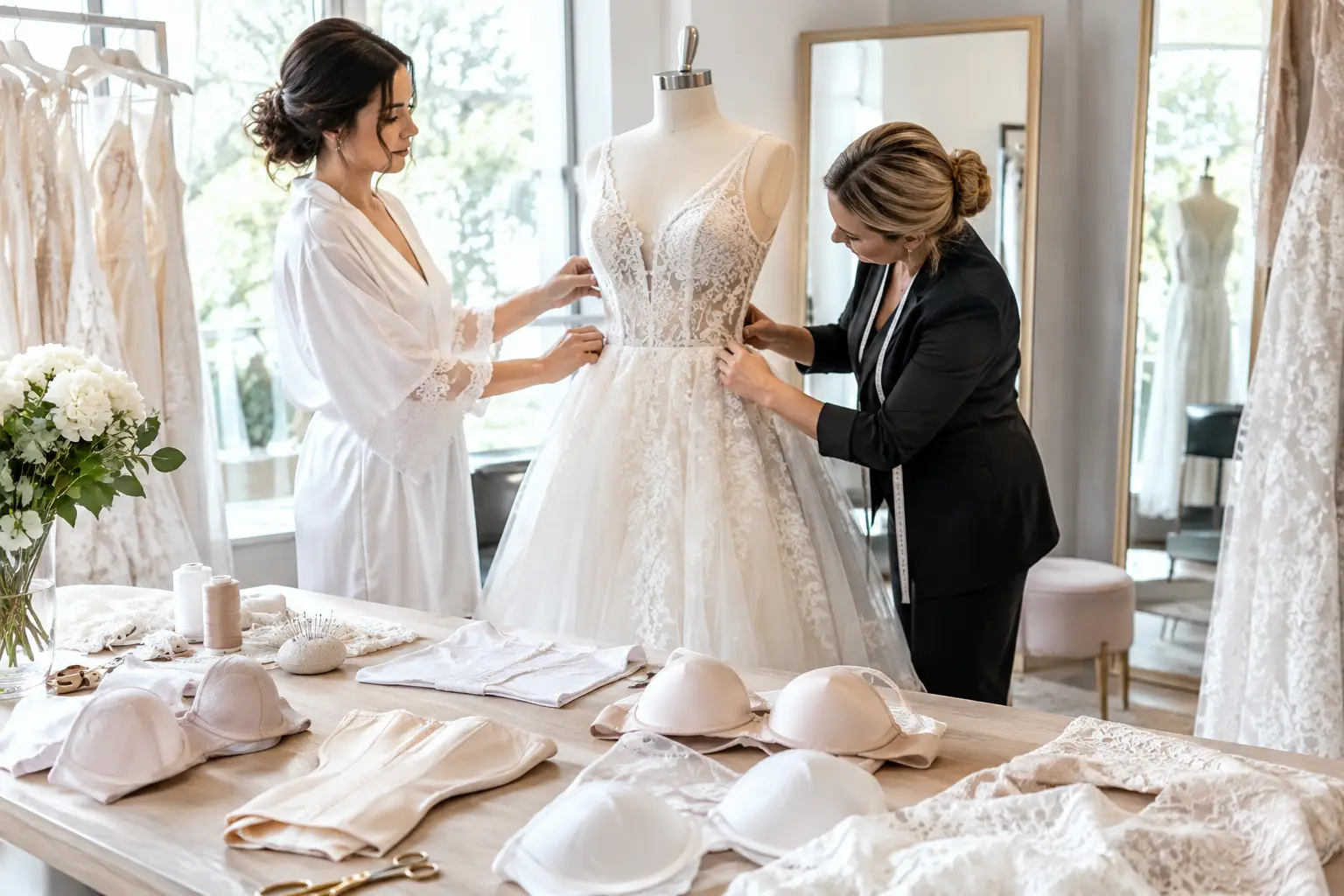
The best option depends on the fabric, the weight of the train and the silhouette of your dress. A fitted gown and a full ballgown need different support. During fittings, ask your seamstress to show a trusted member of your wedding party how the bustle works, and have them take a clear video on your mobile phone. Buttons, loops and ribbons can be tricky when the room is busy and everyone is ready to celebrate.
Match your train to your venue and plans
Your venue should guide the decision, but it does not have to dictate it. A cathedral train can look glorious in a rustic barn if you have a clear aisle and want contrast. Equally, a simple sweep train can feel completely right in a grand venue when the rest of the gown has striking detail.
Think through the practical moments before making your final choice. Will you be walking across grass, cobbles or a gravel drive? Is the aisle narrow? Are you planning portraits outdoors in unpredictable British weather? Will you have a first dance that involves plenty of movement? None of these questions mean you must avoid a longer train. They simply help you plan the right bustle, footwear and helping hands.
It is also worth considering the season. A long, heavy train may feel less comfortable at a warm summer celebration, while an autumn or winter wedding often lends itself beautifully to fuller fabrics and extended lengths. If you are concerned about a train becoming marked outdoors, remember that the bustle will protect it for much of the reception, and minor signs of a well-loved wedding day are often unavoidable.
Try the whole picture in your appointment
When you try on dresses, walk rather than only standing on the podium. Turn, sit down carefully, take a few steps as though you are entering your ceremony, and imagine having guests around you. Ask to see the train spread out and held up, because both views matter.
Bring your venue details, or a few photographs if you have them, and be honest about how you want to feel. Some brides want an unforgettable entrance; others want to feel light, effortless and able to hug everyone without thinking about their skirt. Both are excellent reasons to choose a dress.
At Serena Bridal, a senior stylist can talk you through train lengths alongside silhouette, fabric and alterations, so the decision feels personal rather than prescriptive. The gown should suit your wedding, certainly, but it should also allow you to be fully present in it.
Choose the train that gives you a little thrill when you see it laid out behind you, then make sure it has a practical plan for the rest of the day. With the right alterations and a little preparation, you can have the aisle moment you love and the freedom to enjoy every celebration that follows.