
A gown can look brilliantly white on a rail, then unexpectedly soft beside a pure-white veil. That small contrast is why the choice between ivory versus white gowns deserves more than a quick glance at a label. The right shade is the one that makes you feel luminous, comfortable and entirely yourself – not necessarily the one you imagined before your first bridal appointment.
For many brides, ivory is the colour they fall for once they begin trying dresses on. Yet white still has a wonderfully crisp, modern place in bridal fashion. Understanding the difference will help you look beyond the name on the hanger and choose a gown with confidence.
What is the difference between ivory and white gowns?
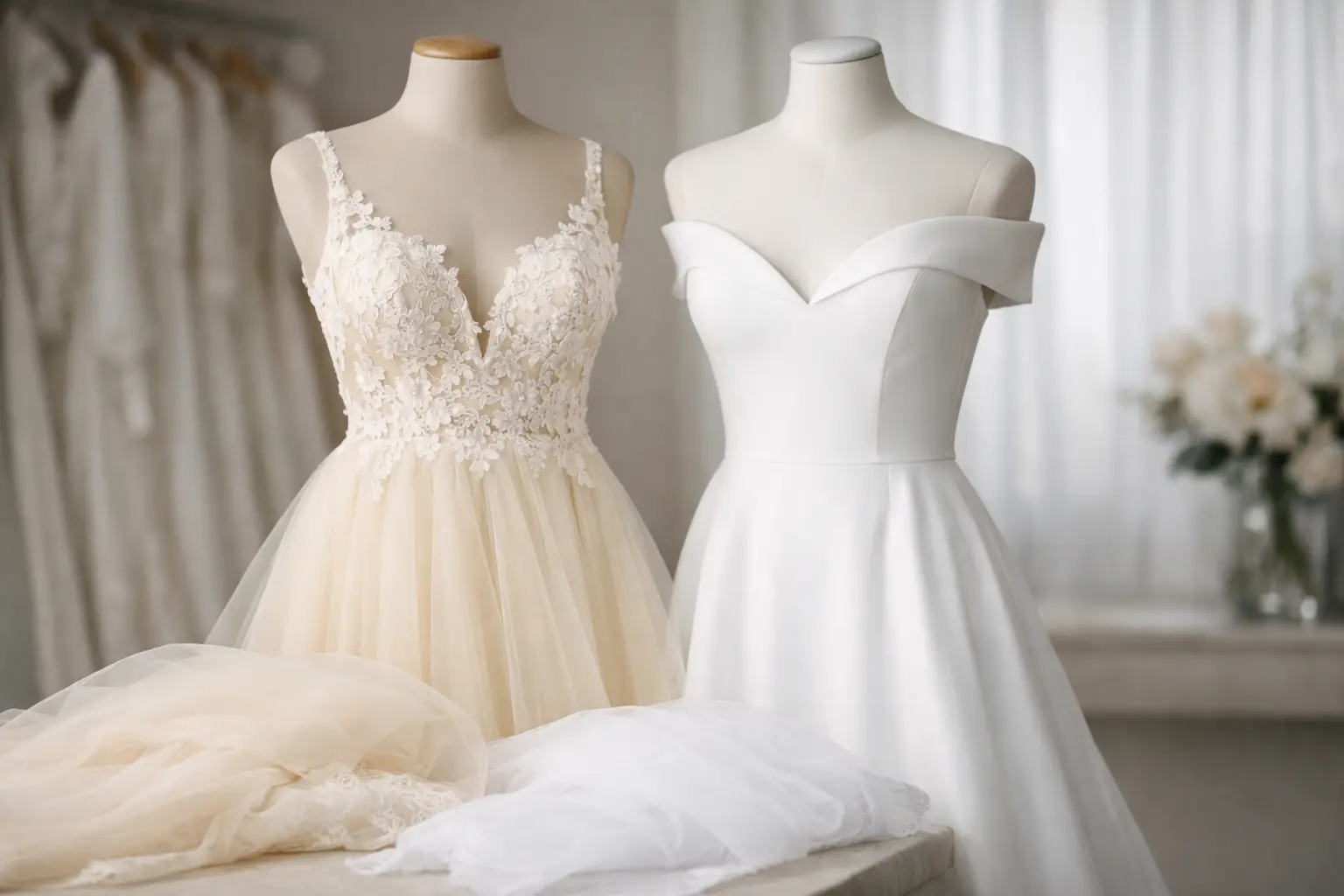
True white is a bright, clean shade with little or no warmth. In bridal fabrics, it can appear fresh, striking and almost blue-toned in certain light. It is often called diamond white, natural white or simply white by different designers, which is where some confusion begins.
Ivory has a gentle warmth to it. It may carry a very subtle cream, yellow, peach or blush undertone, although a modern ivory wedding dress is usually far lighter than the deep cream shade people sometimes picture. In photographs and at a distance, a pale ivory gown can look white. Up close, it often has a softness that flatters the texture of lace, tulle, satin and beading beautifully.
There is no universal colour chart across bridal designers. One label’s ivory may be another label’s light ivory, candlelight or oyster. This is why seeing the actual gown in person matters far more than choosing from an online description.
Ivory versus white gowns: which is more flattering?
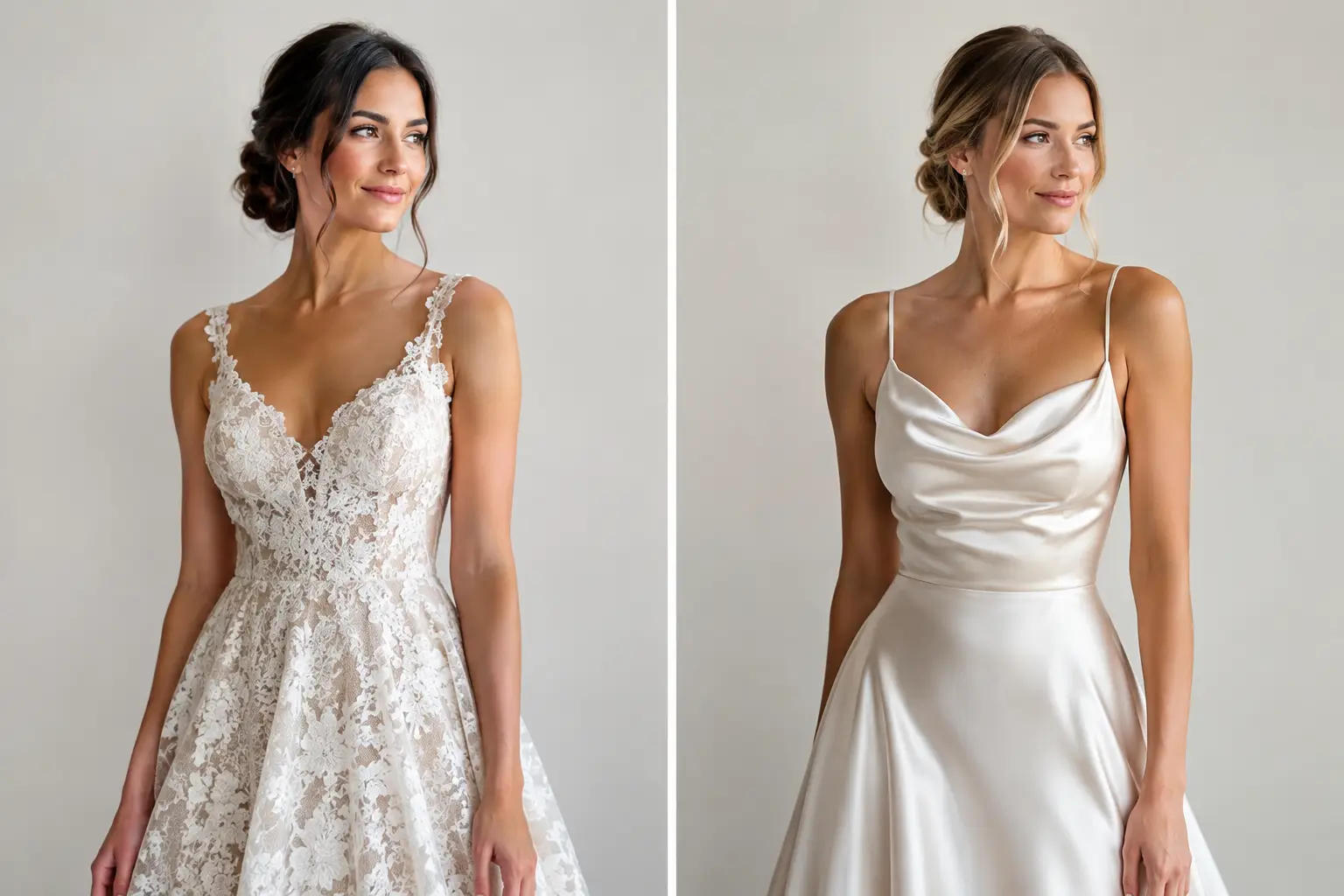
There is no rule that says one shade belongs to one skin tone. A bride with fair skin can look wonderful in white, and a bride with deep skin can look sensational in ivory. The most useful question is not, “What should I wear?” but, “Which shade makes my complexion look rested, radiant and like me?”
White can create a beautiful, clean contrast on deeper complexions and can feel particularly fashion-forward in a sleek mikado or minimalist crepe design. On some fair complexions, however, a very bright white can reflect light upwards and make the skin appear slightly washed out. A softer ivory may bring warmth back to the face.
Ivory is often an easy starting point because its warmth tends to be forgiving across a wide range of complexions. It can make skin look gently glowing rather than overly contrasted. That said, a strongly yellow ivory may not be every bride’s favourite, especially if she loves cool-toned jewellery or a crisp contemporary aesthetic.
During a styling appointment, stand back from the mirror as well as looking closely. Notice your face first. If you see the dress before you see yourself, try another shade. Your gown should frame you, not overpower you.
Your undertone matters, but it is not a test
Cool, warm and neutral undertones can be a useful guide, but they are not a bridal rulebook. Brides with cool undertones may enjoy the clarity of white or a very pale ivory. Warm undertones often sit beautifully alongside ivory, champagne-ivory and soft gold details. Neutral undertones can usually wear either, depending on the dress fabric and overall styling.
Hair colour, make-up, tan and even how you normally wear your jewellery all affect the final impression. If you are planning a spray tan, test your preferred shade before the fitting where possible. A gown you loved against winter skin may look different after a summer tan, and that is perfectly manageable when your stylist knows the full picture.
Fabric changes the colour more than you may expect
A colour name alone does not tell the whole story. White satin catches light differently from white lace; ivory tulle can look lighter when layered over a nude lining; and beaded fabric may throw a subtle sparkle that changes the shade in movement.
A structured satin gown in ivory can still feel clean and contemporary, while a white lace ballgown may look soft and romantic because of its texture. Similarly, a nude or mocha underlay beneath ivory lace can create depth and definition without making the gown look dark. If you are drawn to detailed appliqué, ask to see it against different linings.
This is also why trying on more than one silhouette is helpful. A shade you are unsure about in a fitted crepe dress may become your favourite in an A-line gown with layers of tulle. Let the fabric, shape and colour work together before deciding.
Think about your venue and the light
Lighting can make ivory versus white gowns look very different throughout your wedding day. Daylight usually reveals undertones clearly. A bright white gown can look beautifully crisp for a city wedding, a contemporary venue or a winter celebration, while ivory often feels especially at home in a country house, barn, garden or candlelit setting.
Indoor lighting is warmer and can make ivory appear richer. Cool LED lighting may make white feel sharper. Neither effect is wrong, but it is worth considering the atmosphere you want. If your ceremony and reception spaces have very different light, your dress will naturally shift in appearance as the day goes on.
Photographs are another consideration, but they should not make the decision for you. Professional photographers adjust exposure and white balance, and an experienced photographer will know how to preserve the texture and tone of your gown. More importantly, choose the shade that delights you in the mirror. Feeling at ease will show in every photograph.
Matching your veil, accessories and bridal party
A veil does not need to be an identical shade to your gown, but it should look intentional. A soft ivory veil with a bright white dress can make the dress appear cooler by comparison, while a pure-white veil beside an ivory gown may look noticeably stark. Bring your veil choice into the conversation before ordering, particularly if it includes lace edging, pearls or embroidery.
The same applies to belts, overskirts, jackets and detachable sleeves. A designer’s matching pieces are often made in the exact fabric and colourway of the gown, which can take the uncertainty away. If you are choosing accessories separately, compare them in natural light against a fabric swatch or the dress itself.
Your partner’s outfit and bridesmaid dresses need not match your gown precisely. Crisp white flowers, ivory ribbon and warm neutral bridesmaid tones can all sit together beautifully. Rather than matching every element, aim for a considered palette. For example, ivory works particularly well with soft greens, blush, champagne, taupe and rich seasonal foliage, while white can create a striking pairing with black, navy, silver or clean pastel shades.
What if you have always pictured a white wedding dress?
You do not need to abandon that vision because ivory happens to flatter you. Many brides use the word “white” to mean a traditional bridal gown, rather than a specific pigment. If the feeling you want is classic, fresh and unmistakably bridal, a light ivory gown may give you exactly that feeling.
Equally, if pure white makes you smile the moment you put it on, trust that response. Bridal styling is not about talking you out of your taste. It is about helping you understand what you are seeing, so your decision feels informed rather than rushed.
Try to avoid judging a dress from a single changing-room mirror photo. Phone cameras can exaggerate contrast, pick up warm lighting and alter the colour of satin. Ask to step into a different area of the boutique, view the dress alongside another shade and take a moment without an audience offering opinions.
How to make your choice with confidence
At your appointment, tell your stylist if you have a firm preference for white, ivory or a warmer tone, but stay open to comparison. Trying one bright white and one ivory gown in a similar fabric is often the clearest way to see your preference. Looking at both near your face is more revealing than looking only at the skirt.
It also helps to share the details that shape your day: your venue, season, jewellery, veil ideas, planned tan and whether you want a minimalist or romantic look. At Serena Bridal, a senior stylist can use those details to guide you towards shades and fabrics that feel considered from the first try-on to the final fitting.
The most reassuring answer is often the simplest one. Choose the gown colour that makes you stand a little taller when you look in the mirror. Whether that is luminous white, soft ivory or something delicately in between, it should feel like a choice made for your wedding, your photographs and, above all, you.