
The moment you step into a gown can be surprisingly revealing. A bride who arrives convinced she wants ornate lace may light up in clean, luminous satin. Another may find that satin feels too formal until she tries a soft, botanical lace that brings her whole vision together. When considering lace versus satin gowns, the best choice is not about following a rule. It is about finding the fabric that feels right for your wedding, your comfort and, most importantly, you.
Both are enduringly beautiful bridal choices, but they create very different impressions. Understanding how each fabric looks, moves and photographs will help you arrive at your appointment with useful ideas, while still leaving room for a lovely surprise.
Lace versus satin gowns: the key difference
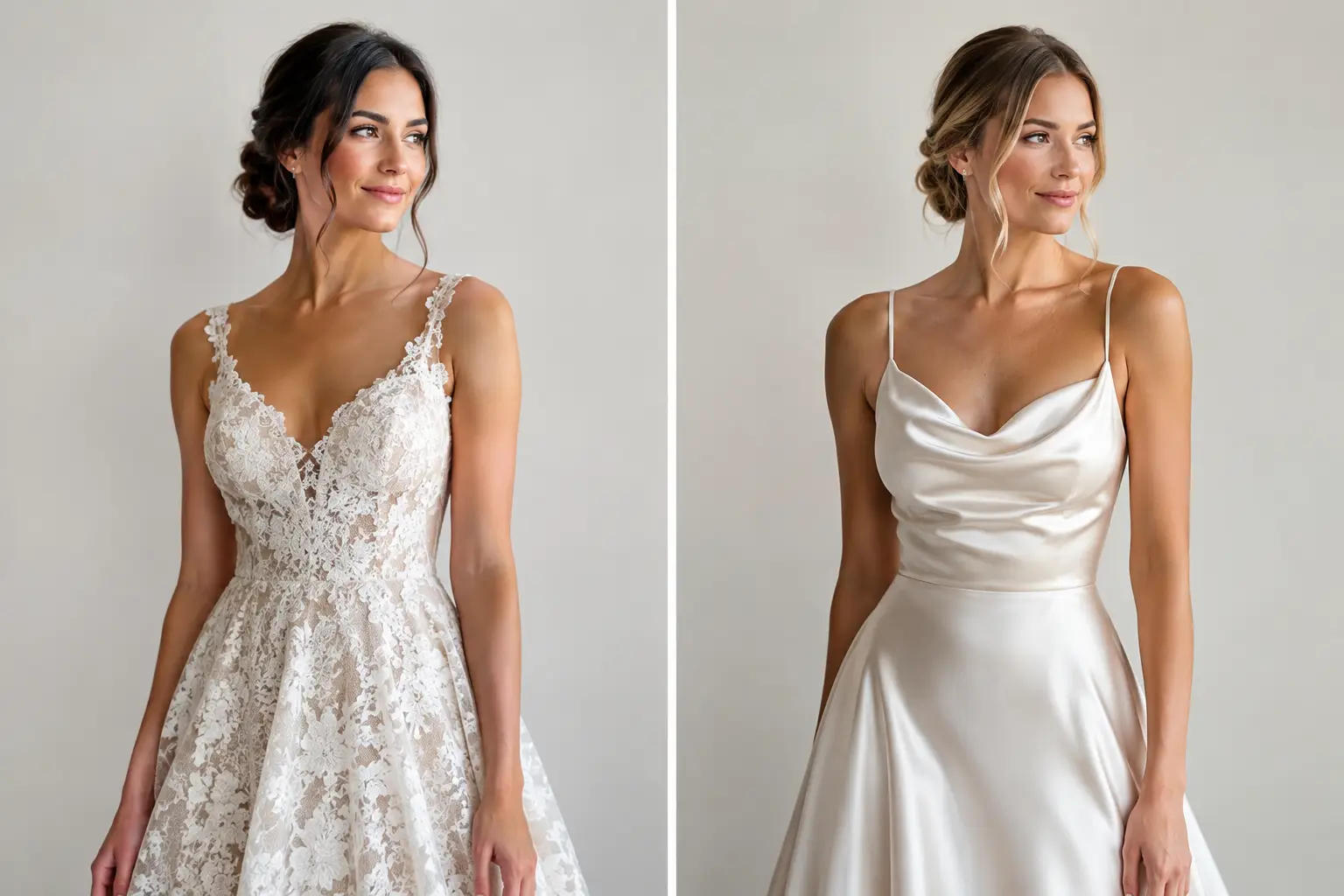
Lace brings texture, detail and softness. It can be delicately romantic, vintage-inspired, bohemian or wonderfully dramatic, depending on the scale and placement of the pattern. A gown in floral Chantilly lace can feel light and ethereal, while bold appliqué lace over a fitted silhouette can create striking definition and a more glamorous finish.
Satin is smooth, light-reflecting and elegant. It is usually associated with a refined, contemporary bridal look, although it can be shaped into anything from a classic ballgown to a sleek fitted dress. Its polished surface lets the cut of the gown take centre stage, making details such as a square neckline, covered buttons, pockets or a sculpted corset especially noticeable.
Neither fabric is inherently more formal, more flattering or more suitable for a particular age or body shape. The difference lies in the mood you want to create and how a particular gown has been constructed.
Choose the feeling before the fabric
It can help to think beyond the words “lace” and “satin”. Instead, consider how you hope to feel as you walk down the aisle. If your vision is soft, expressive and full of intricate detail, lace may feel immediately at home. If you are drawn to clean lines, a confident silhouette and timeless simplicity, satin could be the direction to explore.
Many brides also find that their venue offers a helpful starting point. A lace gown can look beautifully natural in a garden, barn or country-house setting, where its texture sits easily among flowers, timber and candlelight. Satin can be breathtaking in a grand hall, modern venue or city celebration, where its sheen catches the light and gives a sense of occasion.
These are starting points, not restrictions. A sleek satin dress can be perfect for a relaxed outdoor ceremony, especially with a soft overskirt or long veil. Equally, a lace ballgown can feel entirely at ease in a formal venue. Your dress should complement the day you are creating, not be limited by it.
What lace offers a bride
Lace has a wonderful ability to make a dress feel personal. Its pattern adds interest close up and can draw the eye to the parts of the gown you love most. Lace sleeves may offer gentle coverage without feeling heavy, while a lace bodice can add detail and definition above a plain skirt. It is also a natural choice for brides who want a romantic gown without relying on lots of sparkle.
The type of lace matters. Fine lace often has a softer, more delicate look, whereas heavier embroidered or appliquéd lace gives greater texture and visual impact. Some gowns place lace across the entire dress; others use it only on the bodice, train or straps. This can make a significant difference to the overall feel and to how the dress photographs.
There are practical considerations, too. Detailed lace can be forgiving if you prefer not to emphasise every line of the body, particularly when it is layered over supportive lining. However, very textured lace may feel busier than expected if you usually favour minimal clothing. During a fitting, take time to look at the gown from a distance as well as up close. The two views can tell you different things.
Styling a lace gown
Lace often needs less added embellishment because the fabric already carries detail. A simple veil can soften the look without competing with the dress, while understated jewellery keeps the focus on the gown’s craftsmanship. If you love a little glamour, pearl or crystal accessories can work beautifully, but it is worth trying them on with the dress rather than deciding in advance.
Hair styling also changes the effect. Loose waves and a soft veil can lean into romance, while a neat bun and clean earrings can make even a detailed lace gown feel polished and modern.
Why satin feels so special
Satin has a presence that is difficult to recreate with any other fabric. Its smooth finish reflects light gently, creating a luminous quality in person and in photographs. It tends to make a statement through shape rather than surface detail, which is why it works so well for brides who want their silhouette, neckline or waistline to be the focal point.
Structured satin is particularly effective in gowns with boning, corsetry and full skirts. It can hold a dramatic shape and create a defined waist, while softer satin styles offer fluid movement for a more relaxed look. The same fabric family can therefore suit a dramatic ballroom entrance, a chic civil ceremony or an intimate celebration.
A common concern is that satin will show every crease or feel unforgiving. The reality depends on the weight of the fabric, the lining, the cut and the quality of the gown’s construction. A well-fitted satin dress with good internal support can be exceptionally flattering. Your stylist can help you compare different silhouettes, because a fitted satin gown and a satin A-line will feel entirely different on the body.
Styling a satin gown
Satin gives you a beautifully clean canvas. A long veil, statement earrings, a pearl headband or an embellished shoe can all stand out without making the overall look feel overdone. For brides who enjoy changing their look between ceremony and evening, satin also works wonderfully with detachable sleeves, an overskirt or a dramatic bow.
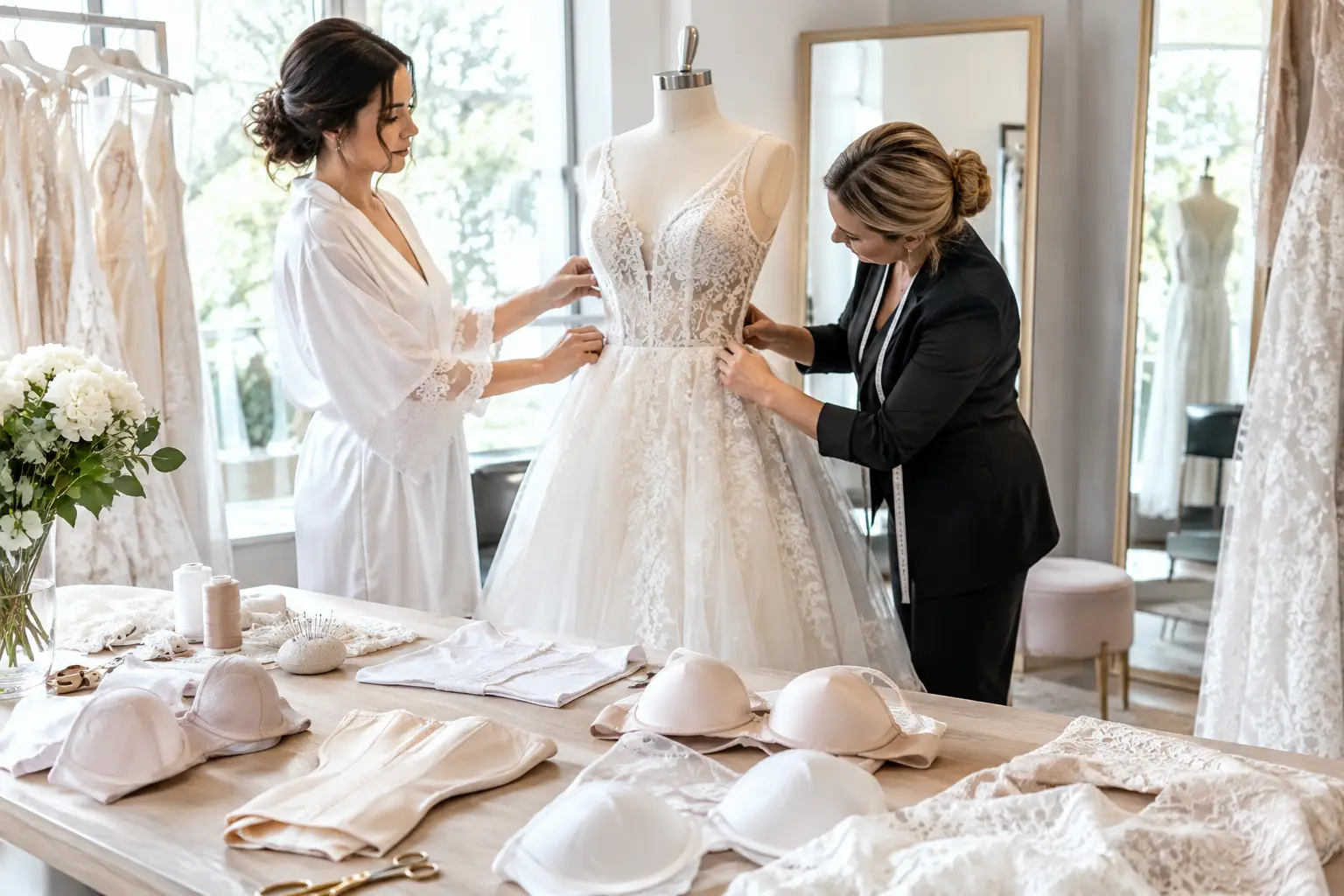
Because the fabric is simpler, fit becomes especially important. The right alterations are not about making you smaller or changing your shape. They ensure the gown sits comfortably, supports you properly and moves as it was designed to move.
Comfort, season and movement
Comfort should be part of the decision, not an afterthought. Lace can range from feather-light to richly layered, and satin can range from fluid to substantial. The perceived warmth of a dress is affected by its lining, sleeves, underskirt and construction just as much as the outer fabric.
For a summer wedding, a lighter lace or softly draped satin may feel more comfortable than a heavily structured gown with multiple layers. For autumn or winter, sleeves, a fuller skirt or richer lace can feel wonderfully appropriate. Yet weddings involve excitement, hugs, photographs, dancing and changing temperatures, so trying a gown on for more than a few minutes matters.
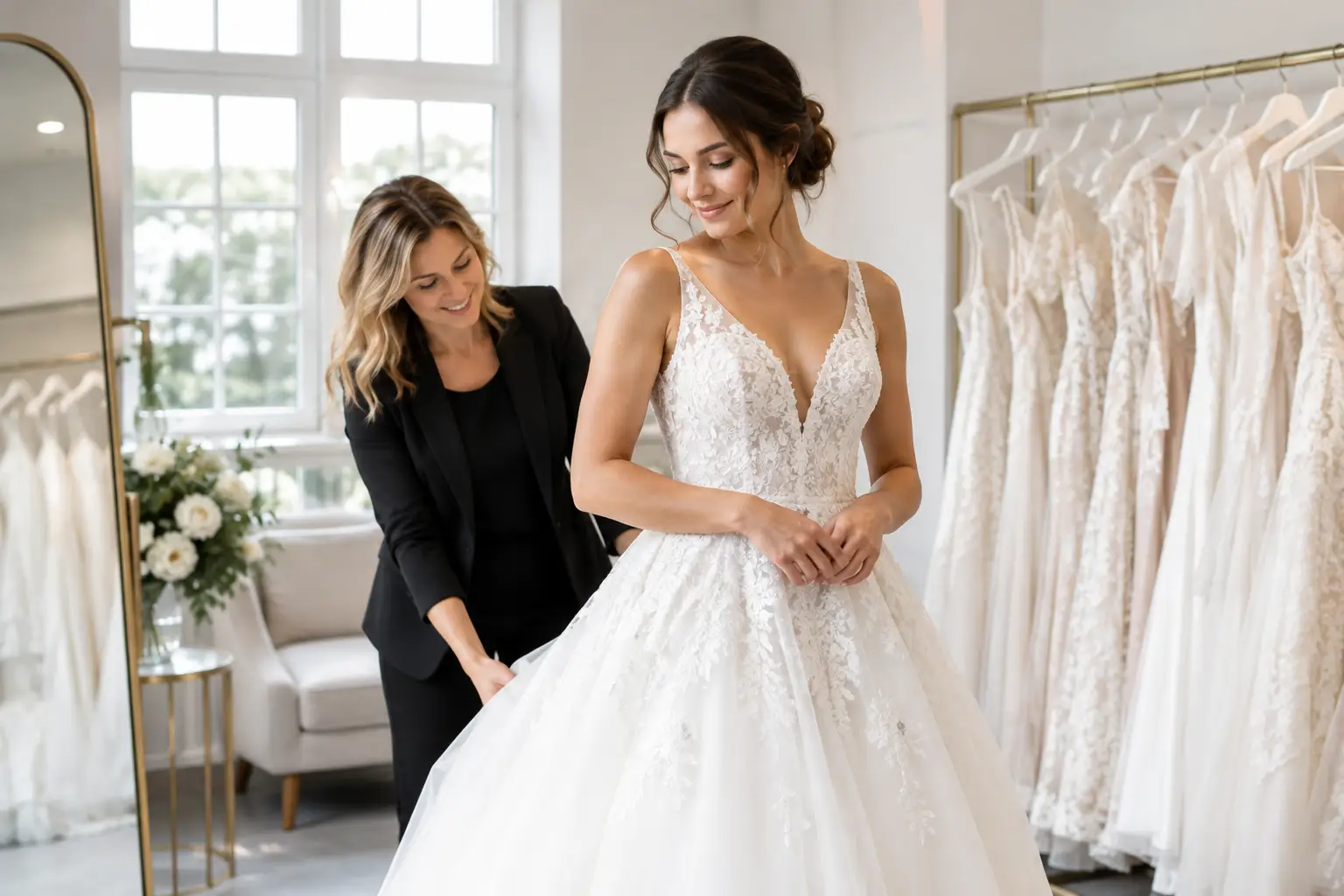
Move in it during your appointment. Sit down. Raise your arms. Take a few steps and imagine greeting your guests. A dress can look exquisite on the pedestal, but it should also allow you to feel present throughout the day. If you are choosing between two fabrics, the gown you feel most relaxed in may be the one you remember most fondly.
Think about photographs, but do not dress for the camera alone
Lace offers depth in photographs. Its pattern can look especially lovely in close portraits, detail shots and images where the train is spread out. Satin captures light and shape, often looking striking in movement and in architectural settings. Both can photograph beautifully in daylight, candlelight and flash photography when the gown fits well.
Consider the details you want in your images. If you love the idea of close-up shots of sleeves, a detailed bodice or a lace-edged veil, lace gives your photographer plenty to work with. If you picture a long, clean train sweeping down a staircase or a sculpted bodice in a formal portrait, satin may bring that image to life.
Still, photographs are only one part of the experience. The best images usually come from a bride who feels comfortable, confident and unmistakably herself.
You do not have to choose only one
Some of the most memorable gowns blend both fabrics. A satin skirt with a lace bodice offers contrast and can balance structure with softness. Lace appliqué over a satin base adds detail while retaining a refined finish. You may also choose a satin ceremony gown and introduce lace through a veil, jacket or removable sleeves.
This is why trying different styles is so valuable. Pinterest boards can show an aesthetic, but they cannot show how a neckline frames your shoulders, how a skirt moves when you walk or which fabric makes you smile the second you see yourself in the mirror.
At Serena Bridal, a dedicated appointment gives you the time to explore those differences with a senior stylist by your side. Bring your inspiration, but stay open to trying one gown outside your usual brief. Often, that is where the magic happens.
Your wedding dress does not need to satisfy anyone else’s idea of bridal. Whether you choose romantic lace, polished satin or a thoughtful combination of both, let the final decision be guided by the feeling you want to carry into your day: comfortable, celebrated and completely yourself.